

Currently Empty: € 0,00
AI
AI Investment Gates: 5 Practical Decisions Before Scaling

AI Investment Gates: 5 Practical Decisions Before Scaling
By Centralink
AI investment gates are review points where leaders decide whether evidence supports the next commitment. Centralink supports management and digital transformation in the Netherlands. This guide explains five practical decisions that connect spending, operating readiness, and governance.
What should AI investment gates accomplish?
AI investment gates should make the next decision explicit, with evidence, accountable authority, and clear conditions. They should help a business learn before increasing its commitment. A gate is useful when it can change the plan, including narrowing, delaying, or stopping a proposal that lacks support.
The five gates below are Centralink’s suggested management structure, not a mandatory sequence or investment guarantee. Adapt them to the use and consequences. A minor bounded use may need a lighter process than a consequential operating service.
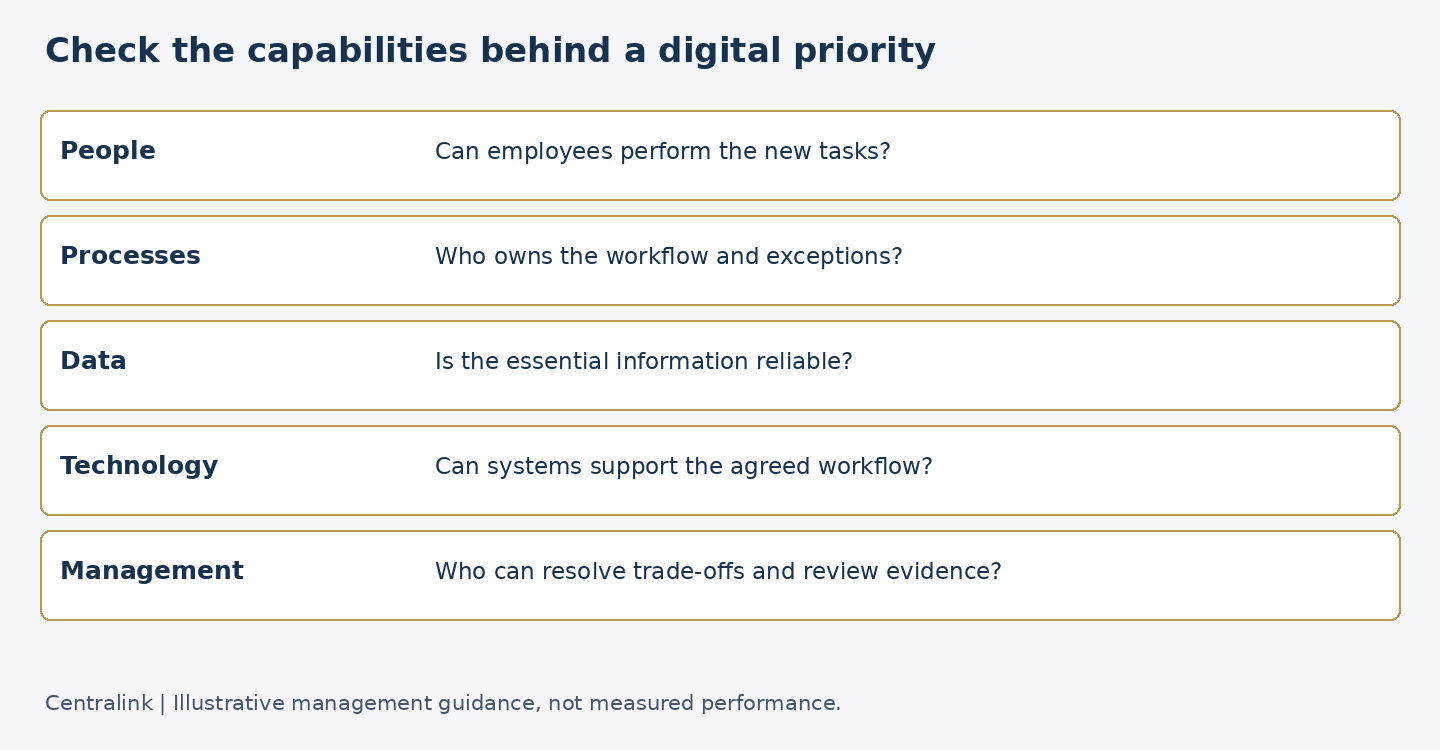
1. Is the problem worth investigating?
Before purchasing a solution, establish the business problem, affected people, baseline, and desired outcome. Compare AI with simpler responses and identify the uncertainty that needs investigation. A proposal should explain why this problem deserves attention now rather than rely on market excitement.
Authorise a proportionate discovery effort with an owner and limits. The output should support a decision about a test, not create an obligation to proceed with the first supplier considered.
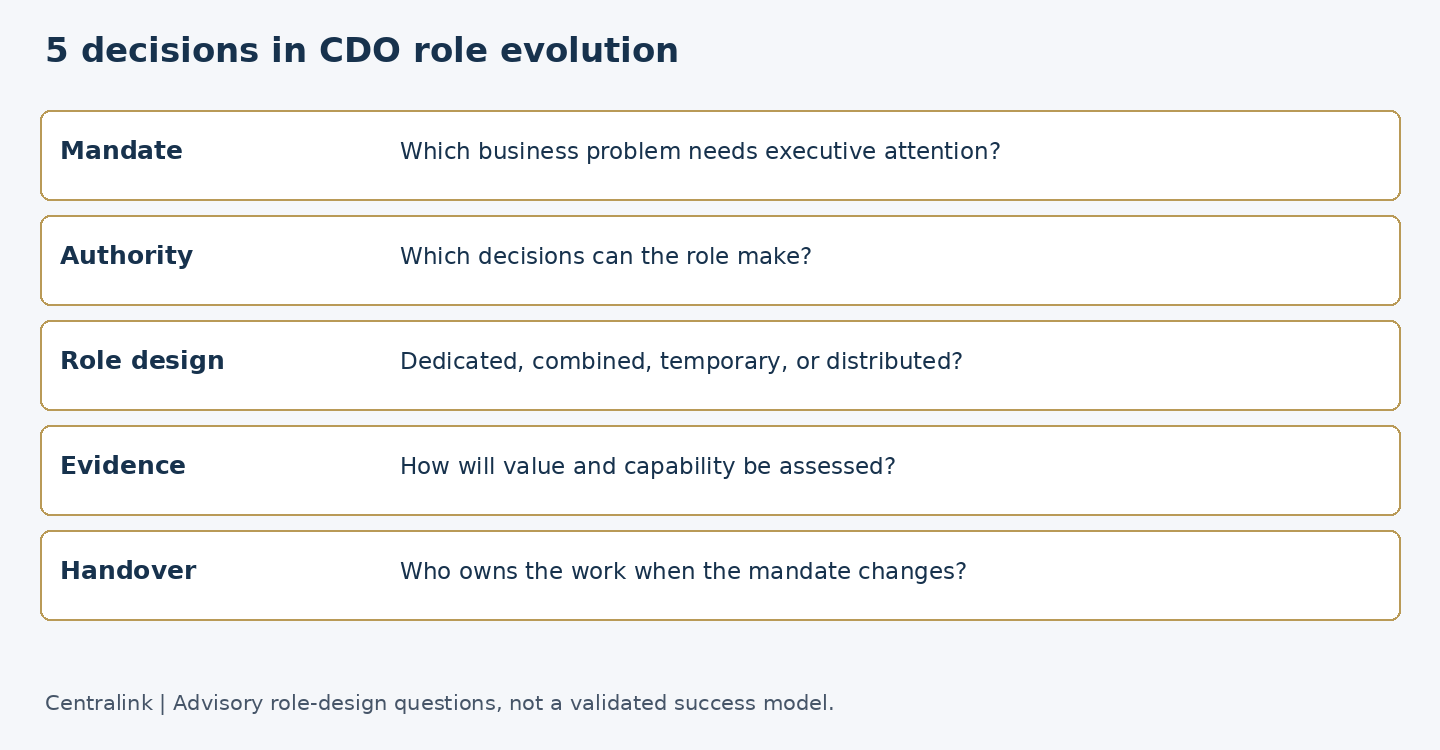
2. Is the proposed pilot suitable?
A pilot needs a defined question, realistic cases, approved information, safeguards, participants, and acceptance criteria. Leaders should understand what the test can establish and what it cannot. The scope should be useful enough to inform a decision while remaining within the organisation’s authority and capacity.
Confirm who reviews output, handles exceptions, and can stop the test. Include total effort and support in the evaluation rather than measuring only the feature the supplier demonstrates.
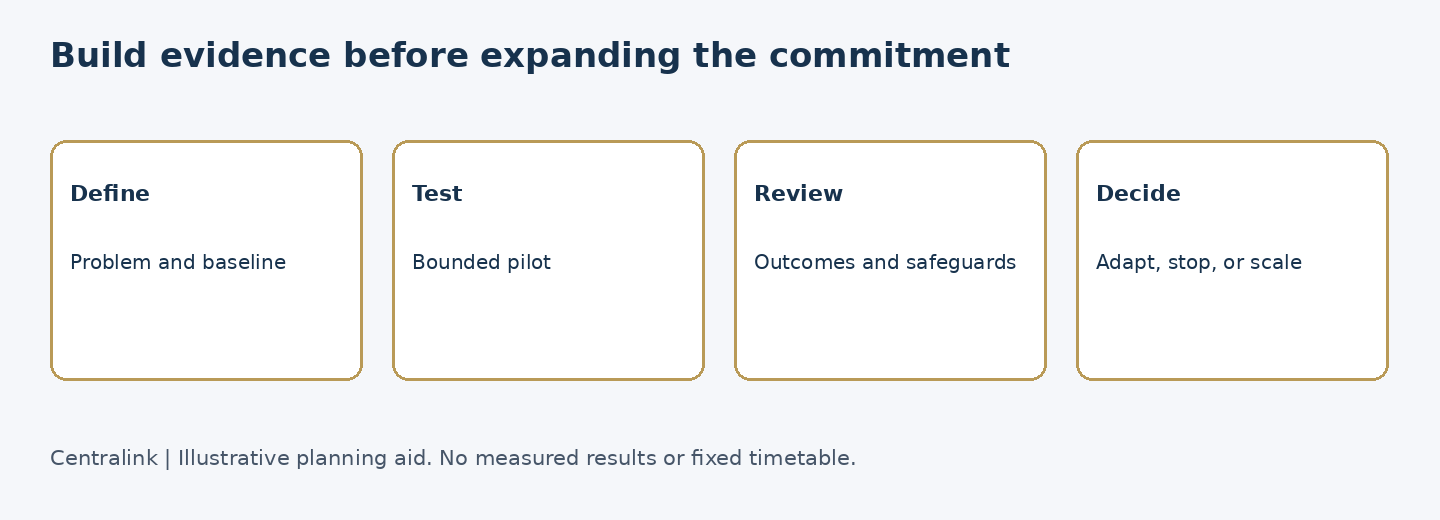
3. Does the evidence support operating use?
The transition from pilot to service should depend on evidence about the intended operating scope. Examine quality, serious errors, correction effort, costs, support, and relevant effects on customers or staff. Record the limits and unresolved conditions before accepting a wider commitment.
Use the AI project handover guide to review ownership, instructions, recovery, and ongoing resources. A pilot’s extra attention should not be mistaken for a sustainable support model.
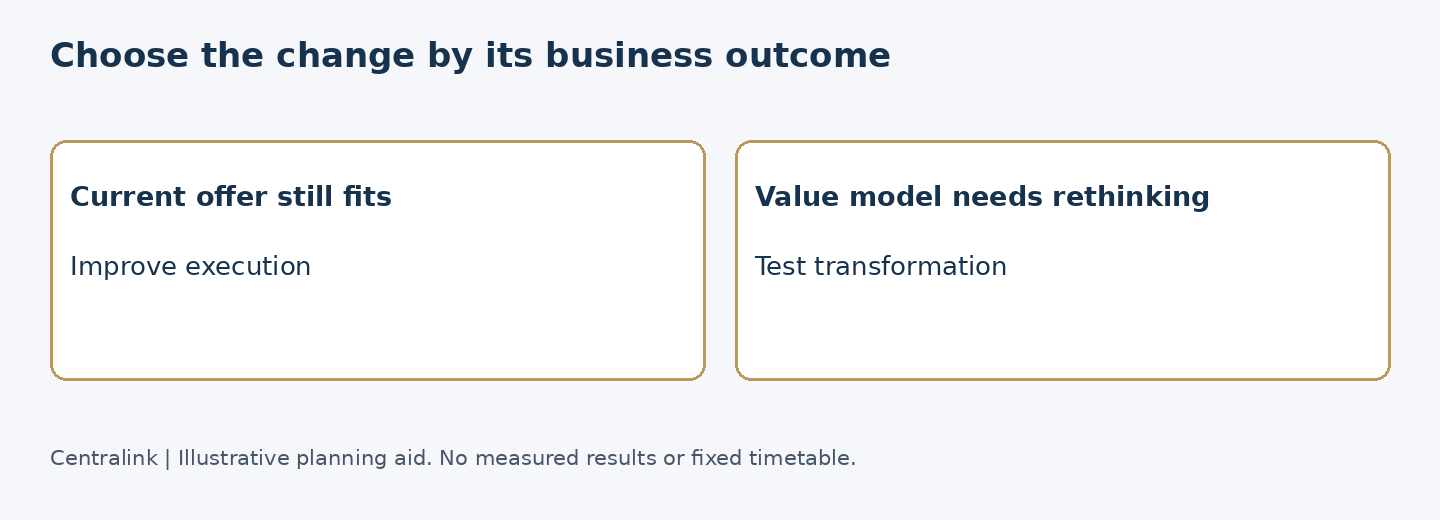
4. Is expansion justified for the next scope?
AI investment gates should treat expansion as a new decision because more users, information, integrations, or autonomy can change the operating conditions. Review which assumptions remain valid and which need further evidence. Success in one team does not automatically establish suitability elsewhere.
Compare the expected benefit with the additional service commitment. Confirm that review, support, information maintenance, and governance can handle the proposed scope. Limit expansion where those conditions are not established.
5. Should the service continue, change, or stop?
An operating use should be reviewed as costs, demand, tools, suppliers, and outcomes change. The decision should consider present evidence rather than only the original approval or prior spending. A programme needs authority to restrict or stop a use that no longer meets its conditions.
Record what changed, what evidence was reviewed, and which decision follows. Use findings to improve other initiatives. Continuing investment should remain a choice supported by the business and operating case.
Evidence and further reading
The OECD’s SME adoption paper describes varied pathways and enabling conditions. The NIST AI RMF supports lifecycle risk management and evaluation. The CIPD’s AI guidance connects implementation with organisational conditions. The gate structure here is a practical management proposal, not a return forecast or a claim that these sources prescribe one investment method.
How can Centralink help?
Centralink can help define the evidence, owners, and conditions for the next AI investment decision. Start with one initiative where the next commitment is unclear or the original assumptions have changed.
Learn more about Centralink, explore our digital transformation services, or contact Centralink to discuss your organisation’s priorities.
Frequently asked questions
These answers clarify the decisions covered in this guide. Adapt the suggested approach to the organisation’s actual work, people, information, and resources. Examples are illustrative management scenarios rather than reported Centralink client results, and the guidance does not certify a system or establish legal compliance.
Do investment gates slow every AI initiative?
They can be proportionate to the decision and consequences. The aim is a clear commitment supported by evidence, not unnecessary paperwork. A small bounded test may need a concise record rather than a large approval process.
Should a successful pilot automatically receive more funding?
No. Review whether its results apply to the next scope and whether the organisation can sustain the service. Expansion can introduce new information, users, costs, and consequences. Make those conditions explicit.
Can stopping be a successful outcome?
Yes. A test or review can show that a use is unsuitable or less valuable than an alternative. Acting on that evidence can avoid a larger unsupported commitment. Record the lesson and conditions for any future reconsideration.