
Currently Empty: € 0,00
AI
AI Work Redesign: 5 Critical Questions Beyond Job Counts

AI Work Redesign: 5 Critical Questions Beyond Job Counts
By Centralink
AI work redesign examines how tasks, responsibilities, skills, and working conditions change when AI is introduced. Centralink supports management consulting, corporate training, and digital transformation in the Netherlands. This guide helps leaders examine the work before making broad claims about jobs.
Why should leaders examine tasks before predicting jobs?
An AI use can change some tasks within a role while leaving others unchanged or creating new review and support work. A task-level analysis therefore provides a better starting point than a general claim that AI will replace or protect a whole occupation. Outcomes depend on the actual design and context.
Distinguish what the tool can demonstrate from what the organisation can operate dependably. The ability to generate an answer does not establish that the complete service, relationship, judgement, or responsibility can be transferred.
1. Which tasks will change, remain, or be added?
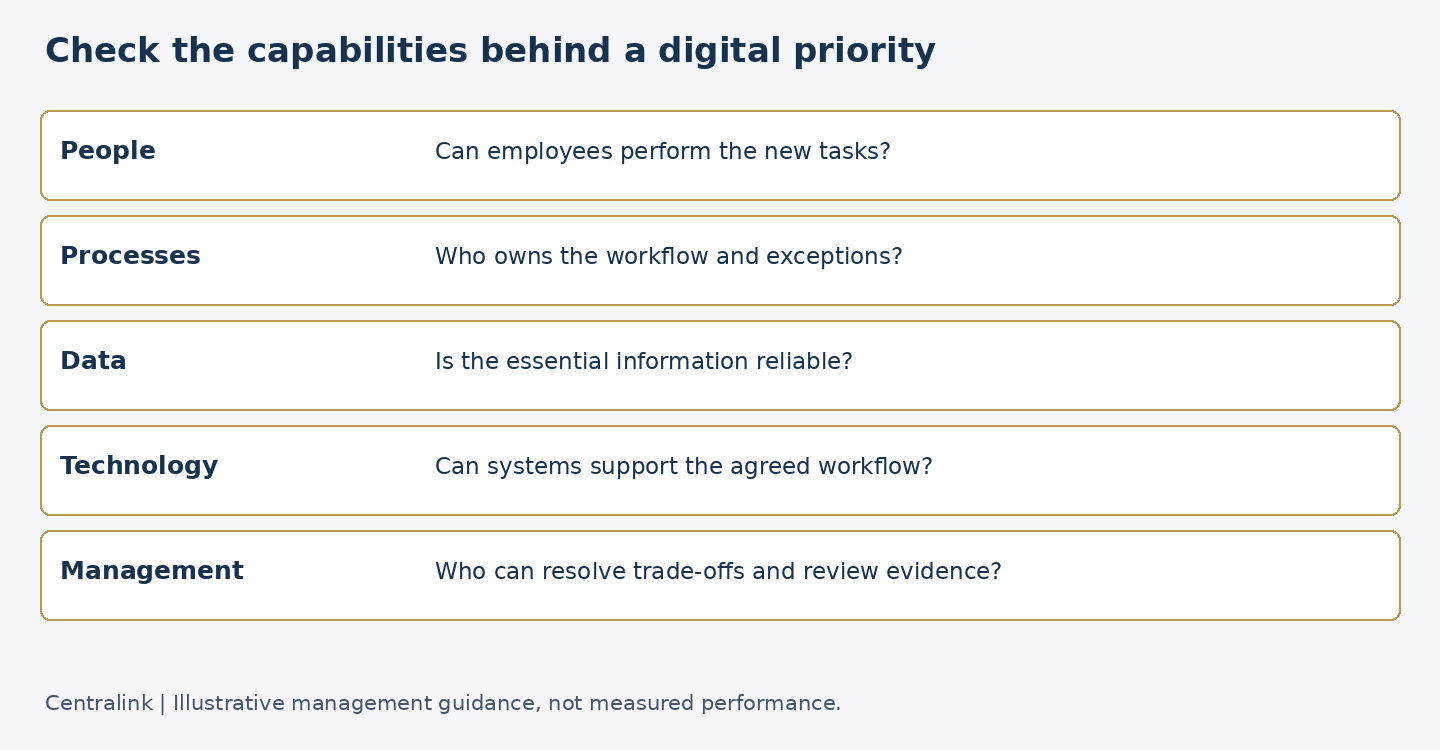
Map the role’s tasks and identify where AI changes preparation, analysis, checking, decisions, communication, or administration. Include the work needed to handle errors and exceptions. A proposal that counts only the automated step may overlook important responsibilities elsewhere in the role.
Use recent ordinary and difficult cases. Ask employees to show how they complete the work and which informal judgements make it dependable. Record the tasks that are not visible in a process diagram.
2. Who will retain judgement and authority?
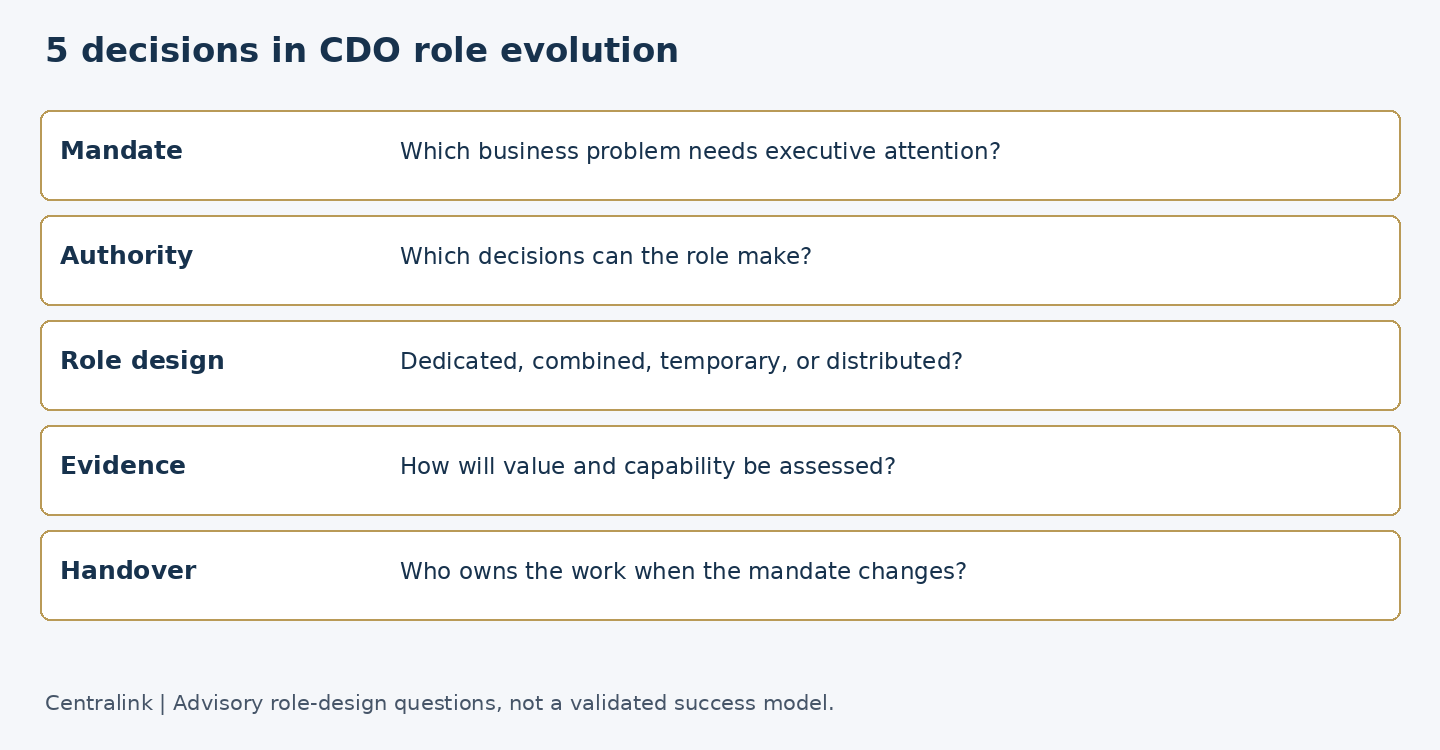
AI work redesign should clarify which decisions remain with authorised people and what support they need to make them. Retaining nominal responsibility without time, evidence, or competence can create an unsuitable role. Define how a person can challenge the output and escalate an uncertain case.
Review the consequence of each decision rather than assuming one approval step covers the whole workflow. Connect role design with operating accountability and appropriate specialist input.
3. How will workload and job quality change?
Review whether the proposed design reduces avoidable effort, increases pace, adds monitoring, changes autonomy, or creates new checking demands. A productivity measure alone may miss important effects on the working experience. Examine differences between teams, tasks, and circumstances.
Use appropriate feedback and operating evidence. Involve employees and the relevant representative channels while choices remain open. Specific consultation and employment obligations require their own review.
4. What capability and learning are needed?
Work redesign should identify the knowledge, practice, and support required by the changed role. Users may need to verify sources and recognise unsuitable outputs, while managers need to review outcomes and respond to concerns. Learning should follow actual responsibilities rather than a generic technology curriculum.
Provide realistic practice, time, and advice routes. Use the AI learning leadership guide to examine whether the organisation supports the capabilities it expects.
5. What evidence will guide the next decision?
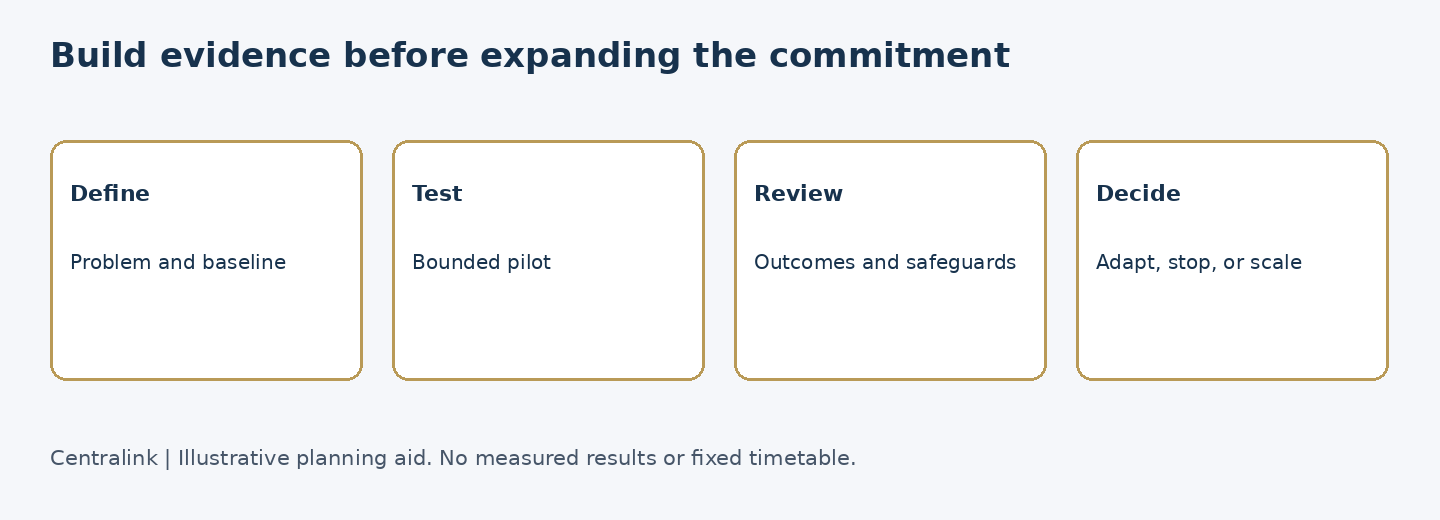
A work-redesign pilot should examine service quality, complete effort, errors, support, and relevant effects on people. Compare results with a clear baseline and record the limits of the test. The decision should consider both operating performance and whether the role remains workable.
A hypothetical team might save drafting time but spend more effort verifying incomplete summaries. Leaders could revise the information, review process, or task scope before drawing conclusions about staffing. This is an illustrative management scenario, not a reported client result.
Evidence and further reading
The OECD’s algorithmic management research highlights changing managerial tasks, worker concerns, and consultation; the category is broader than AI. The CIPD’s AI guidance addresses people impacts and work design. The OECD’s skills brief distinguishes specialist and general literacy needs. These references support examining work, not a universal prediction about employment outcomes.
How can Centralink help?
Centralink can help map tasks, responsibilities, and learning needs, then define a practical review of the proposed design. Begin with a role where the effects of an AI use are not yet clear.
Learn more about Centralink, explore our digital transformation services, or contact Centralink to discuss your organisation’s priorities.
Frequently asked questions
These answers clarify the decisions covered in this guide. Adapt the suggested approach to the organisation’s actual work, people, information, and resources. Examples are illustrative management scenarios rather than reported Centralink client results, and the guidance does not certify a system or establish legal compliance.
Does automating a task mean removing a job?
Not necessarily. A role contains several tasks, and automation may change their balance or create additional work. Assess the complete role and operating context before drawing conclusions about staffing.
Should employees be involved in AI work redesign?
Their knowledge can reveal tasks, exceptions, workload, and service needs that a demonstration misses. Use suitable involvement and representative channels while decisions remain open. Assess any specific legal consultation requirements separately.
Can productivity alone establish a good redesign?
No. Review quality, errors, workload, authority, support, and relevant effects on people alongside productivity. A faster process can still be difficult to sustain or create problems elsewhere in the service.