

Currently Empty: € 0,00
Management
Digital Mastery: 5 Critical Capability Checks

Digital Mastery: 5 Critical Capability Checks
By Centralink
Digital mastery combines digital capabilities with the leadership needed to turn them into business value. This guide explains the concept, five practical checks, and the limits of performance claims. Centralink supports management and digital transformation in the Netherlands.
Table of Contents
What does digital mastery mean?
Digital mastery describes the ability to combine digital capabilities with leadership capabilities to create business value. Technology enables new ways of working and serving customers, while leadership supplies direction, engagement, and governance. The concept concerns how those capabilities work together rather than how many tools an organisation has purchased.
Centralink supports management and digital transformation in the Netherlands. This guide explains the concept and offers five practical capability checks. The checks are Centralink’s editorial discussion tool, not a validated maturity score, certification, or promise of financial performance.
MIT Sloan’s 2021 explanation of George Westerman and Didier Bonnet’s work connects digital capability with the ability to envision and lead organisational change. It also highlights the importance of employee experience alongside customers and operations.
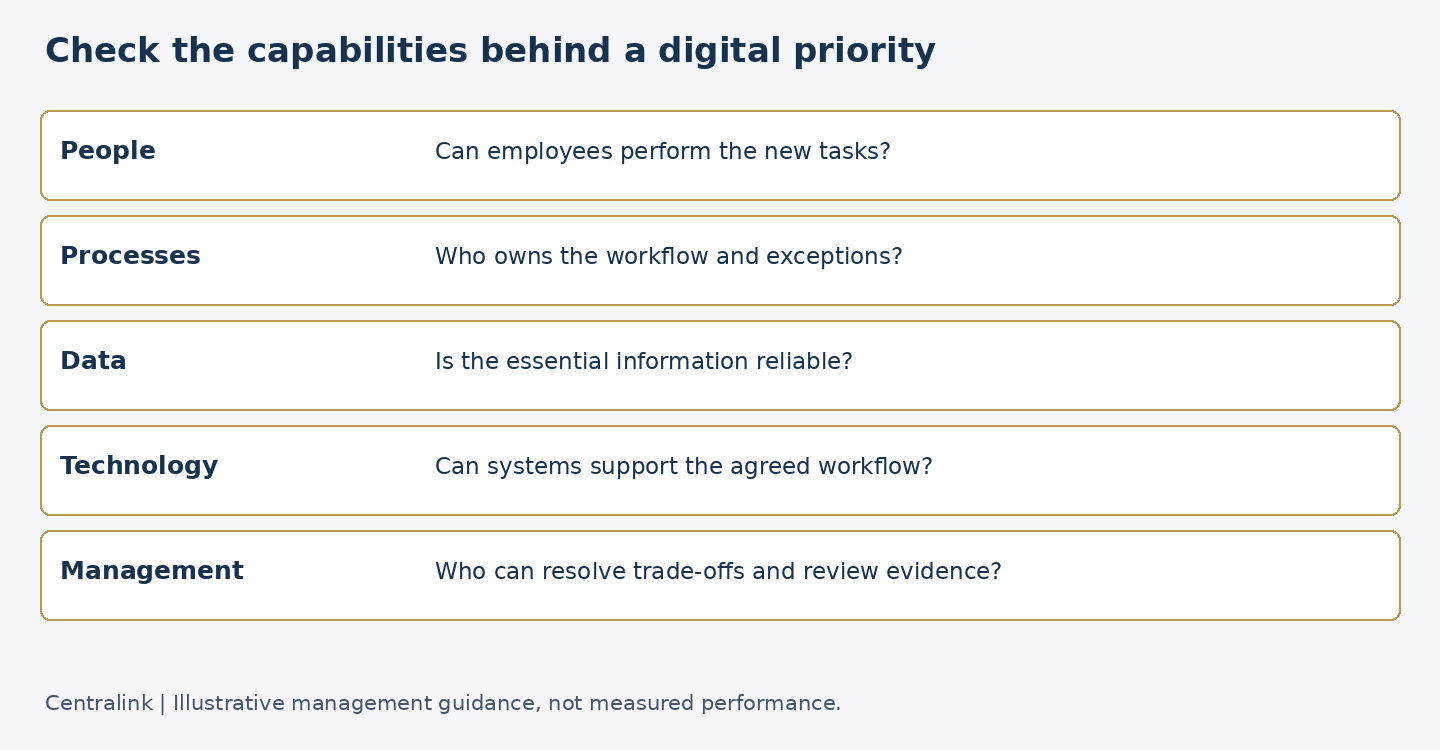
Check 1: Do digital capabilities support a real business outcome?
A digital capability is useful when it enables the organisation to do something that matters to customers or operations. The starting point is a defined outcome and the information, systems, and processes needed to deliver it. Purchasing a tool is an input, while dependable use and business impact require additional work.
Review one important service or workflow. Identify the information required, the decisions it supports, and the handovers that affect quality. Ask whether the capability remains reliable when cases are difficult or volumes change.
A capability can involve several tools and teams. Assess the complete result rather than rating individual systems in isolation. For related guidance, read digital transformation in organisations.
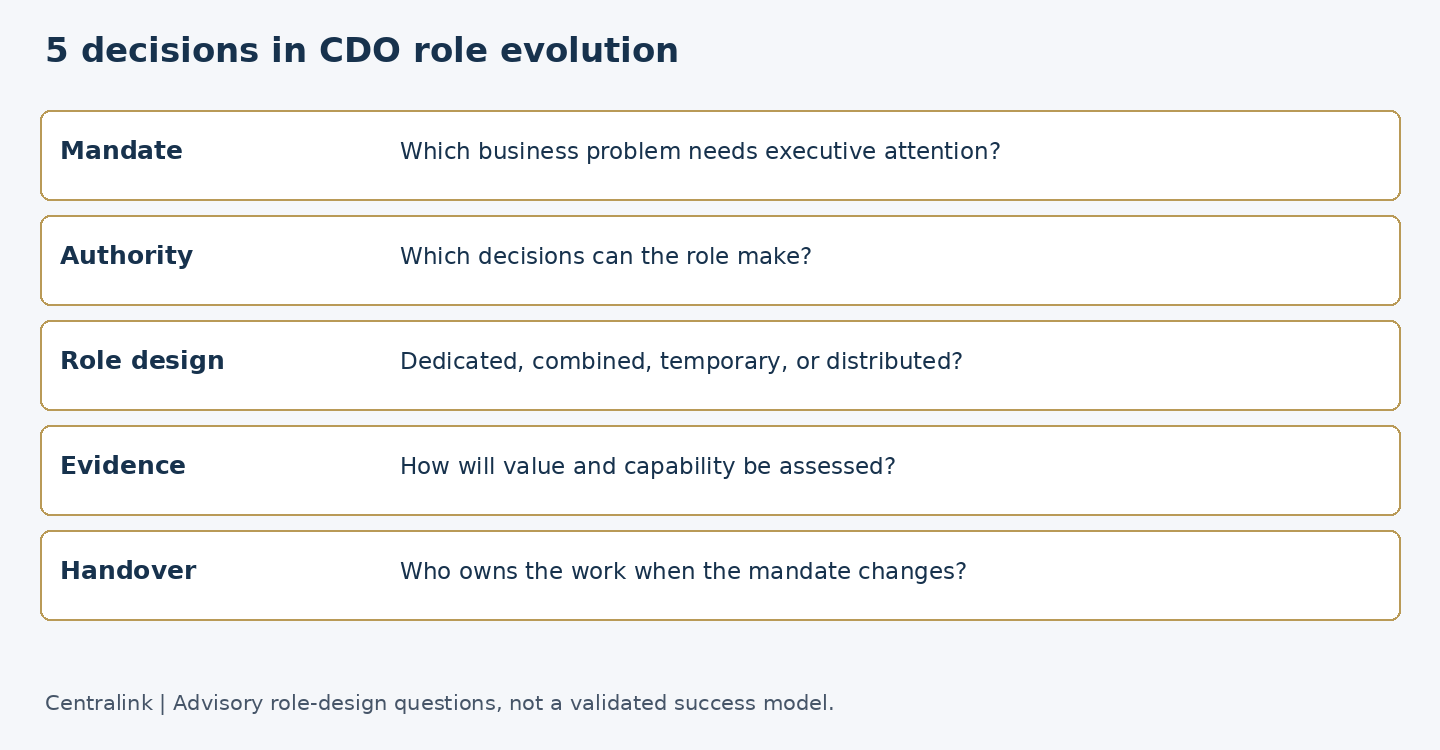
Check 2: Can leaders give direction and resolve trade-offs?
Leadership capability connects digital possibilities with clear priorities, ownership, and coordinated action. Leaders need to explain the reason for change, involve the people affected, and resolve competing demands on resources. Without these conditions, technically sound initiatives can remain disconnected or fail to become dependable business practices.
MIT’s 2015 account of Westerman’s research describes digital and leadership capabilities as complementary. It also stresses close working relationships between business and IT, rather than treating technology specialists as an obstacle to bypass.
Ask who can approve a priority change, who accepts the intended outcome, and how disagreements are escalated. A governance meeting is useful only if it produces decisions that people can implement.
Check 3: Are customer and employee experiences connected?
A digital change can improve the visible customer interface while increasing hidden effort for employees. Review both experiences together. Reliable service depends on whether staff have suitable information, skills, processes, and support to fulfil the promise made to customers, including situations that the standard workflow does not handle well.
Observe a real case from the customer request to completion. Look for repeated data entry, unclear status information, avoidable checking, and work shifted between teams. These details can explain why an apparently simple customer improvement is difficult to sustain.
Do not assume that removing every manual step is the objective. Some tasks need human judgement, reassurance, or exception handling. The question is whether responsibilities and information support the intended outcome.
Check 4: Is progress supported by evidence?
Progress should be assessed through business outcomes, adoption, reliability, costs, and risk, with a clear baseline and measurement method. A positive self-assessment can identify confidence but does not independently prove capability or value. Compare perceptions with operating evidence and investigate differences before drawing a conclusion.
Capgemini’s Digital Mastery 2020 research surveyed 1,000 executives. Its public summary reports respondents’ views of capability development. These historical findings are useful context, not a current benchmark or a prediction for a Dutch SME.
The older research discussed in MIT’s 2015 article reported a profitability association for the companies studied. It should not be presented as a guaranteed return from adopting the label or buying technology. An individual organisation still needs its own evidence and business case.
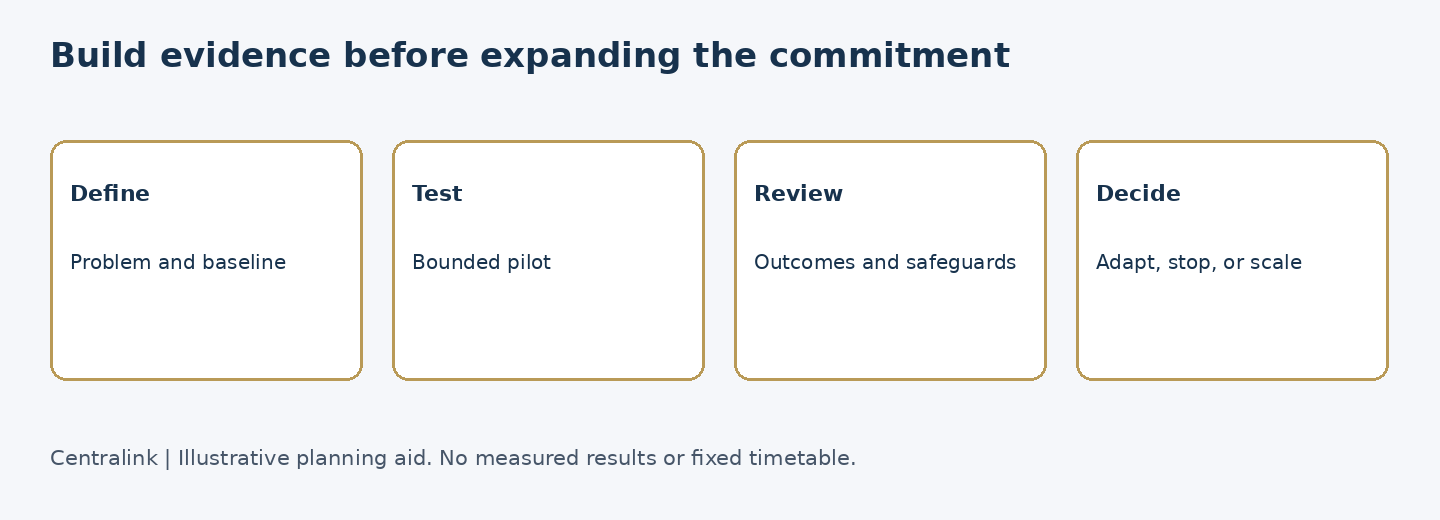
Check 5: Can the organisation sustain learning and operation?
Digital mastery is not a permanent state achieved by completing a project. Technologies, customer needs, and operating conditions continue to change. The organisation needs responsibilities for maintaining services, improving capabilities, and reviewing assumptions. Learning should lead to decisions, with enough resources to implement what has been learned.
Review support ownership, information quality, staff development, supplier dependencies, and the process for changing priorities. Ask whether these arrangements depend on a single enthusiastic individual or can continue when roles change.
For a practical decision process, see our digital transformation roadmap. It connects business value, bounded testing, and operating ownership through explicit review gates.
A practical capability review
A capability review should connect a claimed strength with an observable result and the next improvement decision. Avoid scoring broad labels without evidence. Use a small number of important capabilities, identify the consequence of each gap, and agree who will act on the findings and when progress will be reviewed.
| Capability area | Evidence to examine | Decision to make |
|---|---|---|
| Customer value | Service records, feedback, and demand | Which problem deserves priority? |
| Operations | Quality, delays, exceptions, and rework | Which dependency limits reliability? |
| People | Task performance, support needs, and workload | What preparation is required? |
| Information and systems | Data quality, integration, access, and recovery | Which foundation needs strengthening? |
| Leadership | Clear decisions, ownership, and resource allocation | Which responsibility or trade-off is unresolved? |
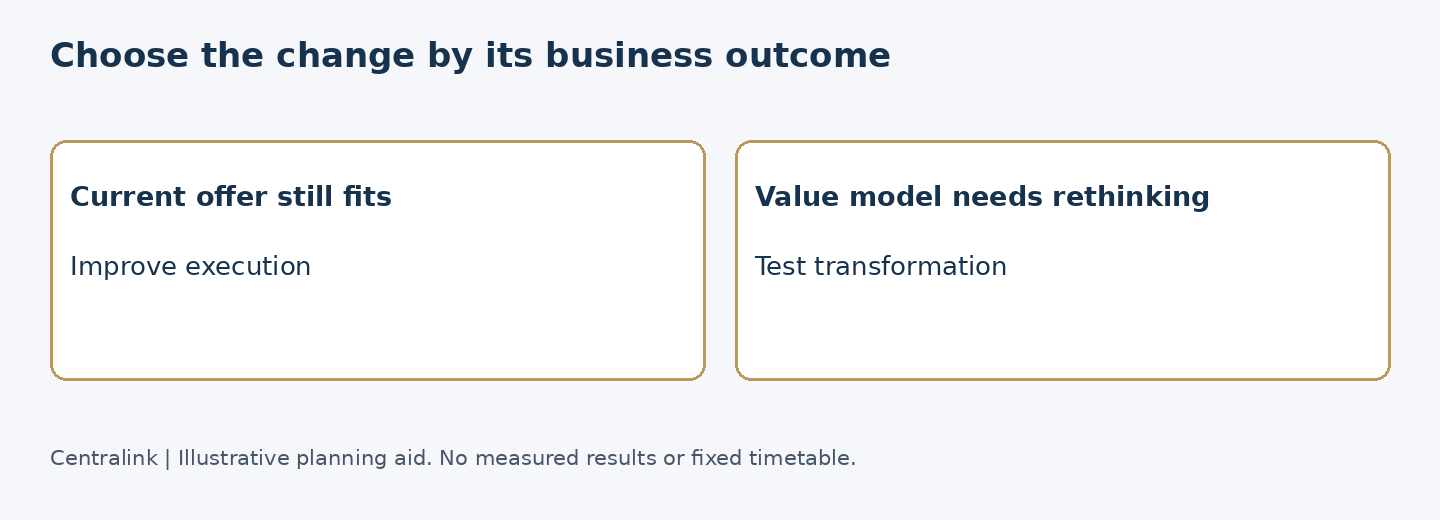
This table is a discussion structure, not a validated assessment instrument. A useful review can conclude that a focused improvement is more appropriate than a wider transformation.
Illustrative example: connected capabilities
Consider a hypothetical service business introducing a customer portal. Digital capability might provide access to reliable status information, while leadership capability clarifies priorities, resolves departmental conflicts, and provides the conditions for staff to maintain that information. Neither side can deliver the full customer promise alone.
If the portal works but data ownership is unclear, the customer may receive inconsistent updates. If leaders communicate a clear ambition but systems cannot provide dependable information, the promise remains difficult to fulfil.
Assess both sides before expanding the service. This is an illustrative planning example, not a Centralink client result or evidence of a guaranteed performance improvement.
Which digital mastery claims need caution?
Treat claims of mastery carefully when they rely only on self-ratings, technology counts, historical company examples, or a single financial measure. Each can provide context, but none establishes that a particular organisation has the capabilities needed for its strategy. Evidence should match the actual decision and operating conditions.
- Avoid tool counts: More platforms do not automatically mean stronger capability.
- Avoid universal returns: Historical associations do not guarantee future results.
- Avoid borrowed experience: Published research should be attributed to its researchers.
- Avoid permanent labels: Capabilities need maintenance and review as conditions change.
A balanced review should recognise both strengths and constraints. The purpose is to make better investment and operating decisions, not to obtain a flattering label.
Digital mastery is a useful concept when it keeps technology and leadership in the same conversation. The practical task is to identify the capabilities required by the business, examine evidence of their performance, and address the gaps that matter most. Progress should remain connected to customer value and sustainable operations.
Learn more about Centralink, explore our digital transformation services, or contact us to discuss capability development.
Frequently asked questions
These answers clarify the scope and practical use of this guide. Apply the guidance to your organisation’s circumstances, and check specialist requirements where the decision involves regulated activities, personal data, or significant contractual commitments. The examples in this article are illustrative rather than reported client results.
Is digital mastery the same as owning advanced technology?
No. The concept combines digital capabilities with leadership capabilities. Tools need suitable processes, information, skills, and accountability to create value. Assess what the organisation can do reliably and how leaders support that work, rather than counting its technology purchases.
Does digital mastery guarantee higher profits?
No. Research may report associations for the companies and periods studied, but that does not establish a guaranteed return for another organisation. Profitability depends on many conditions. Develop a specific business case and examine actual operating and commercial results.
Can a small business use the concept?
Yes, as a proportionate way to examine digital and leadership capabilities. A small business may need a short practical review rather than a complex maturity programme. Focus on the capabilities required by its strategy and the evidence needed for its next decision.