

Currently Empty: € 0,00
Management
Tourism Digitalisation Plan: 7 Practical Steps

Tourism Digitalisation Plan: 7 Practical Steps
By Centralink
A tourism digitalisation plan connects visitor needs with practical improvements, clear owners, resources, and evidence. This guide provides seven steps and a planning worksheet for Dutch tourism businesses. Centralink supports management and digital transformation in the Netherlands.
Table of Contents
What should a tourism digitalisation plan contain?
A tourism digitalisation plan should connect a visitor or operating problem with a proportionate change, clear responsibilities, realistic resources, and evidence for the next decision. It can be concise, provided it exposes important dependencies and uncertainties. A list of tools or a launch date alone is not a complete plan.
Centralink supports management and digital transformation in the Netherlands. This practical guide complements our tourism digital transformation priorities. The seven steps below are Centralink’s suggested planning approach, not a validated maturity assessment.
NBTC’s guidance recognises different ambitions and capacities across tourism businesses. The OECD’s 2026 tourism report provides wider context on resilience and balanced outcomes. Together, these support matching the plan to the organisation’s actual situation.
1. Select one visitor or operating problem
A tourism digitalisation plan should begin with a specific problem the business can observe and measure. Choose a recurring issue that matters to visitors or staff, such as unclear preparation information, booking corrections, or avoidable service delays. Do not begin with a technology category and search for a reason to use it.
Review recent questions, complaints, support work, and operating records. Define who is affected and the outcome that should improve. Record the baseline before selecting a target.
2. Map the visitor journey and handovers
Map the relevant part of the visitor journey from initial information to service completion. Identify which people, systems, and partners provide information or make commitments. A visitor may experience one service while the business relies on several disconnected handovers that create uncertainty or repeated work.
Include exceptions such as late arrivals, booking changes, accessibility questions, and unavailable services where relevant. Ask staff to demonstrate how those cases are handled today.
3. Assign ownership of essential information
Accurate information needs an owner and an update process. Decide who maintains opening times, location details, prices, availability, access arrangements, and service conditions, and how changes reach the channels visitors use. A new interface will not resolve conflicting information if responsibility remains unclear.
Create a short register of the information item, source, owner, update trigger, and channels displaying it. Test corrections as well as initial publication.
4. Compare simple and larger responses
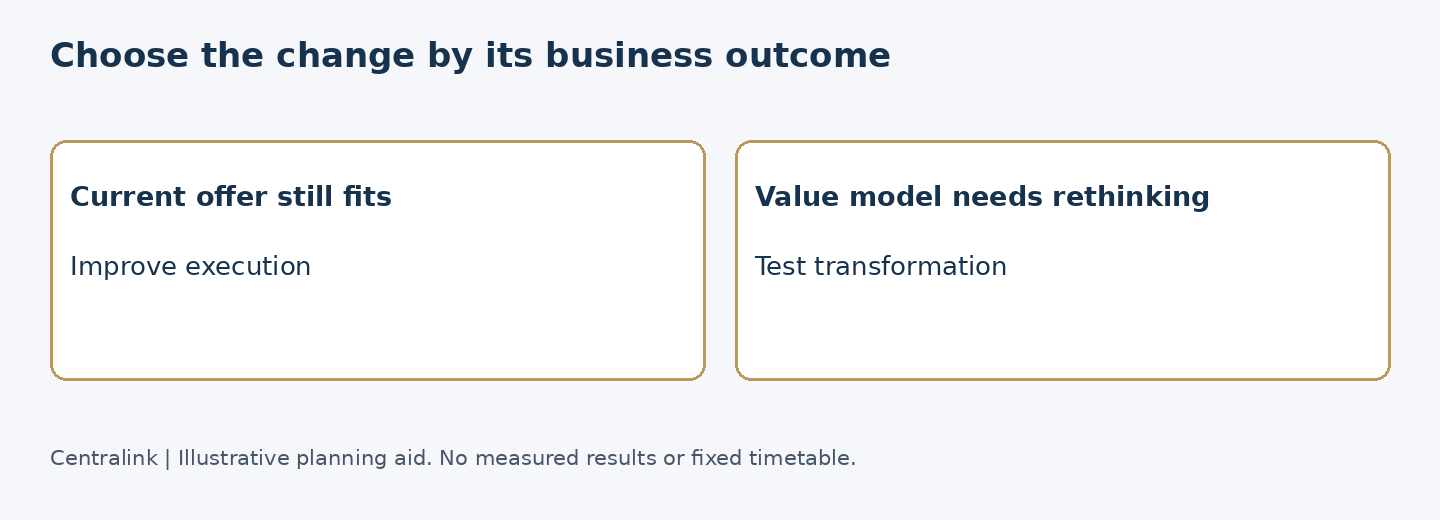
Compare a process clarification, an improvement to an existing tool, and a new system where appropriate. Assess the visitor benefit alongside ongoing effort, staff skills, information quality, fees, and supplier dependencies. The most advanced option is not automatically the best fit for a small tourism business.
Include the cost of maintaining the service during peak periods and the ability to change supplier. Explain why the selected option is proportionate to the problem and the organisation’s capacity.
5. Test a bounded change
A bounded pilot should answer a defined question using realistic cases and agreed safeguards. Specify the scope, owner, acceptance criteria, exclusions, and review date. A successful demonstration does not establish whether a service can handle normal demand, difficult cases, and the support workload required after launch.
Test with a suitable range of visitors and staff tasks. Record errors, questions, manual corrections, and extra support, not only favourable feedback. Retain an appropriate alternative for situations the pilot cannot support.
6. Prepare staff and operating support
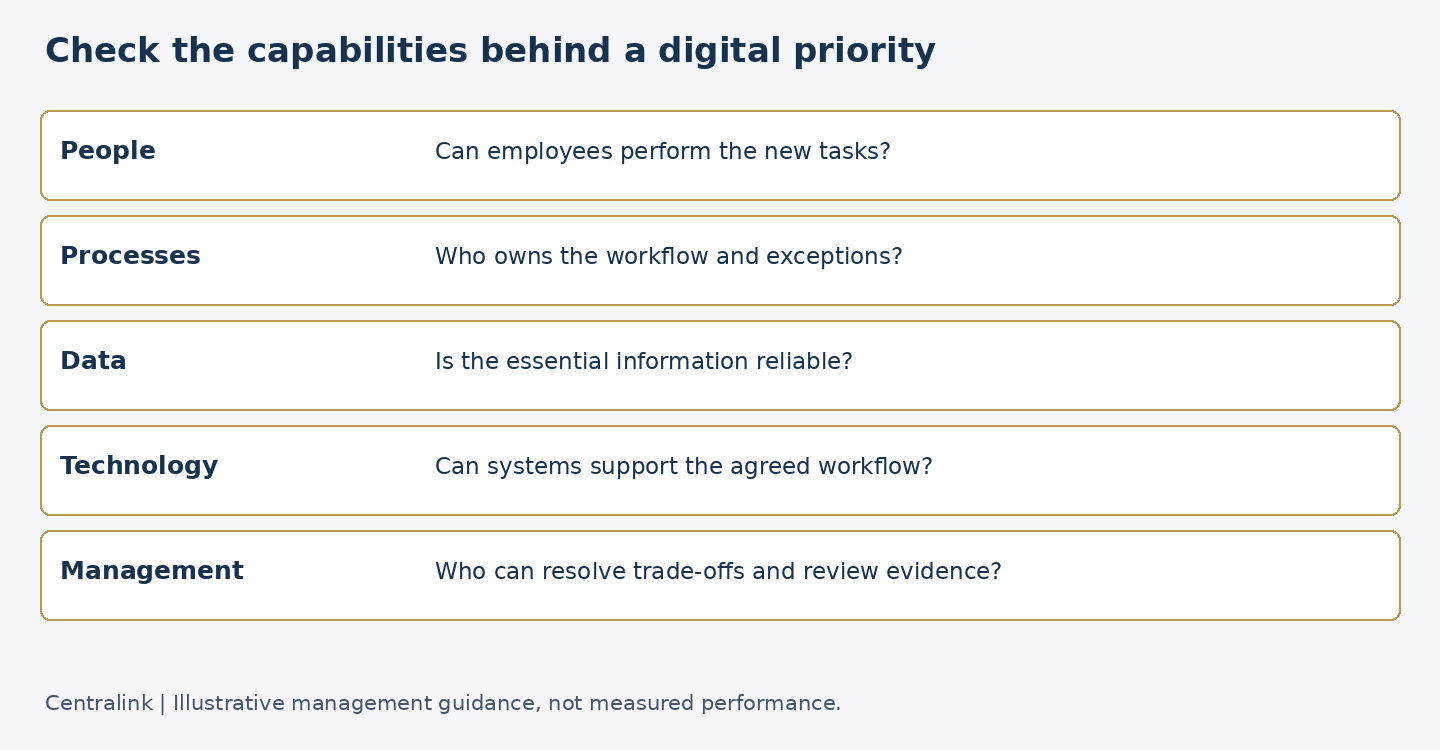
Staff need to understand the purpose of the change, perform the new tasks, and know where to obtain help. Provide task-based practice and realistic time for learning. Assign responsibility for support, maintenance, supplier contact, and information corrections before the change becomes part of normal service.
Check peak-period capacity and handovers between shifts or seasonal staff. A service that depends on one person’s informal knowledge may be difficult to sustain.
7. Review evidence before expansion
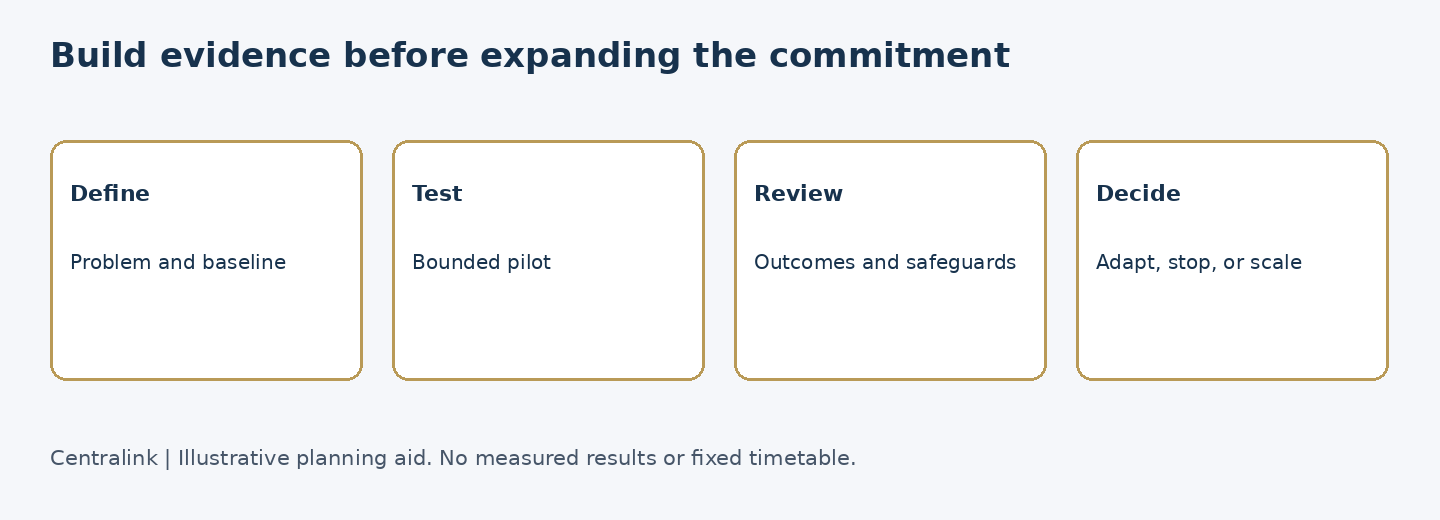
Expansion should follow a review of visitor outcomes, operating reliability, staff workload, costs, and relevant risks. Compare results with the baseline and examine alternative explanations. The next decision may be to expand, adapt, continue testing, pause, or stop, depending on what the evidence establishes.
Document the limits of the test and what additional conditions expansion would require. If the change aims to reduce waste or resource use, measure that outcome rather than assuming digitalisation creates it automatically.
A simple planning worksheet
A worksheet helps a business connect the selected problem with the evidence and ownership needed to act. Keep the fields specific and distinguish facts from estimates. The example below is a suggested discussion structure, which should be expanded where the service, dependencies, or consequences require more detailed planning.
| Field | What to record |
|---|---|
| Problem | Visitor or operating issue and affected group |
| Baseline | Current performance, source, and limits |
| Scope | Included tasks, channels, and exceptions |
| Information | Sources, owners, and update responsibilities |
| Change | Selected response and alternatives considered |
| Resources | Costs, staff time, skills, and ongoing support |
| Pilot | Acceptance criteria, safeguards, and exclusions |
| Decision | Owner, review date, and conditions for expansion |
Where partners or platforms are involved, add responsibility for visitor commitments and exception handling. A shared service needs clear handovers even when each participant uses a different system.
How does this connect with wider tourism priorities?
A business plan should consider visitor experience alongside workforce capacity, resource use, accessibility, and partner coordination. These priorities can reinforce each other, but trade-offs should remain visible. A tool that improves one measure may create additional workload or shift pressure elsewhere unless the complete service is reviewed.
The European Commission’s tourism transition pathway connects digital and green transition with resilience, skills, and collaboration. It provides policy context, not a requirement that every tourism business adopt the same tools.
Choose the outcomes relevant to the proposed change and measure them honestly. Avoid using broad sustainability or innovation labels as substitutes for evidence.
Illustrative example: reducing pre-arrival questions
A hypothetical accommodation business receives repeated questions about arrival and access. A focused plan might improve the accuracy and clarity of pre-arrival information, assign an owner, and test whether guests can find the answers they need. A large new platform may not be necessary to establish the first improvement.
Review the number and type of questions, incorrect information, staff corrections, and feedback from guests with different needs. Check whether the change remains useful when arrival arrangements change.
This is an illustrative planning example, not a reported Centralink client result. Base the actual plan on the business’s own information, service commitments, and visitor evidence.
A tourism digitalisation plan should make the next improvement manageable and reviewable. Clear visitor needs, dependable information, prepared staff, and operating ownership provide a stronger foundation than a long technology wish list. Expand when evidence supports the commitment and the organisation can sustain the service it promises.
For a broader planning structure, read our digital transformation roadmap. Learn more about Centralink, explore our digital transformation services, or contact us.
Frequently asked questions
These answers clarify the scope and practical use of this guide. Apply the guidance to your organisation’s circumstances, and check specialist requirements where the decision involves regulated activities, personal data, or significant contractual commitments. The examples in this article are illustrative rather than reported client results.
Does a small tourism business need a large digital programme?
Not necessarily. A focused plan can address a recurring visitor or operating problem without a large programme. Start with the problem, compare proportionate responses, and include the information, skills, and support needed to keep the improvement dependable.
How should a tourism pilot be evaluated?
Compare results with a documented baseline and review visitor outcomes, errors, staff effort, support needs, and costs. Include difficult cases and record exclusions. A pilot should inform a decision about the next commitment rather than only demonstrate that a tool can function.
Should digitalisation always increase visitor numbers?
No. The objective may be better information, service quality, manageable demand, resource use, or staff capacity. Choose the outcome relevant to the business and destination context. More visitors are not automatically evidence that a particular digital change was successful.