

Currently Empty: € 0,00
AI
AI Change Management: 6 Practical Steps for Adoption

AI Change Management: 6 Practical Steps for Adoption
By Centralink
AI change management prepares people and operating processes for a specific change in how work is done. Centralink supports management consulting, corporate training, and digital transformation in the Netherlands. This guide explains six practical steps, from understanding the work to reviewing outcomes after launch.
What is different about AI change management?
AI change management must address how people interpret, question, and act on outputs that may be uncertain or wrong. The change extends beyond learning a new interface. Roles, review responsibilities, information handling, workload, and escalation may all need to change alongside the technology.
Start by describing what will happen differently in an ordinary working day. Explain the intended benefit and the limits of the proposed use. Avoid promising that every employee will welcome the change or that the tool will deliver a guaranteed improvement.
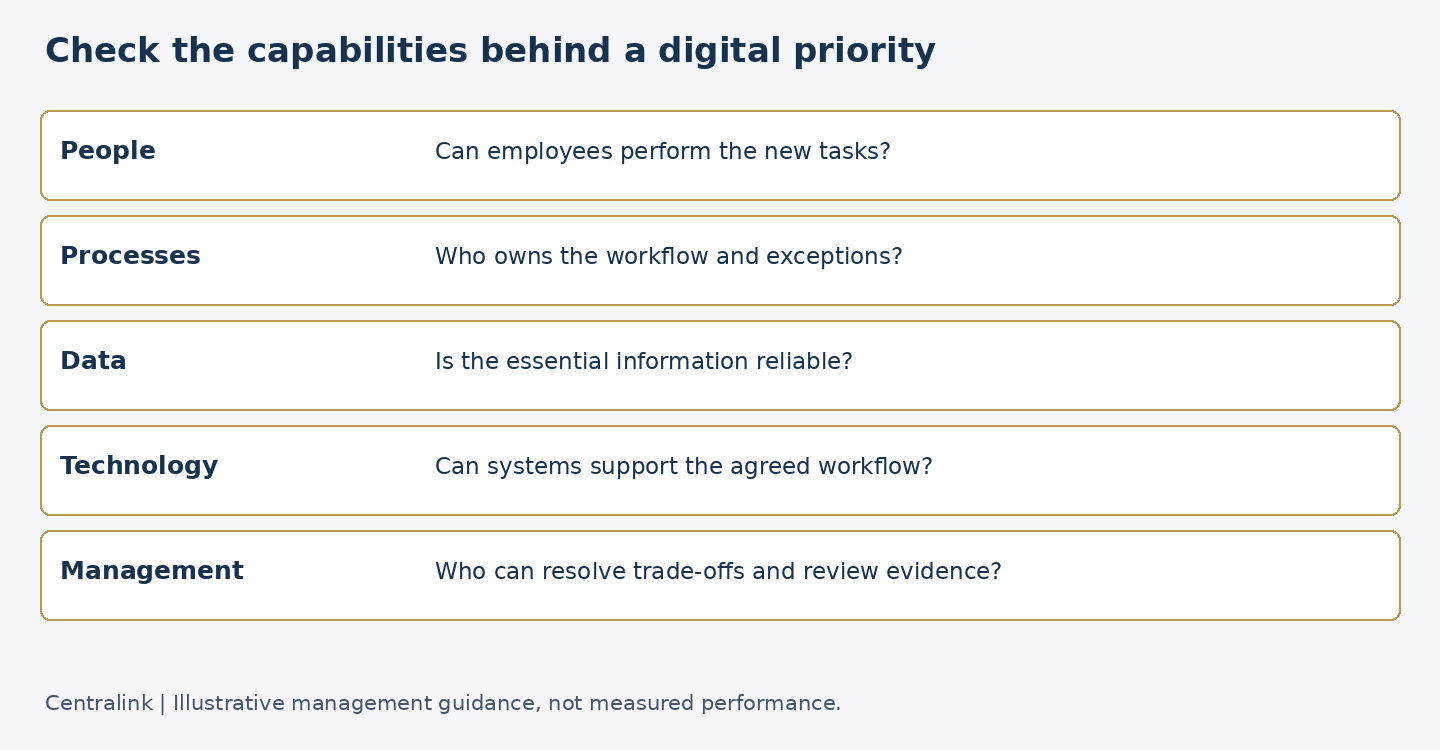
1. Understand the work before planning communications
A change plan should begin with observed tasks and affected people. Map the current workflow, including exceptions, informal support, and the judgements experienced staff provide. This helps distinguish a communication need from a design problem that announcements and training cannot solve.
Ask staff to demonstrate a difficult case. Identify where the proposed tool adds review work, changes customer commitments, or alters a handover. Record those effects before selecting a rollout date.
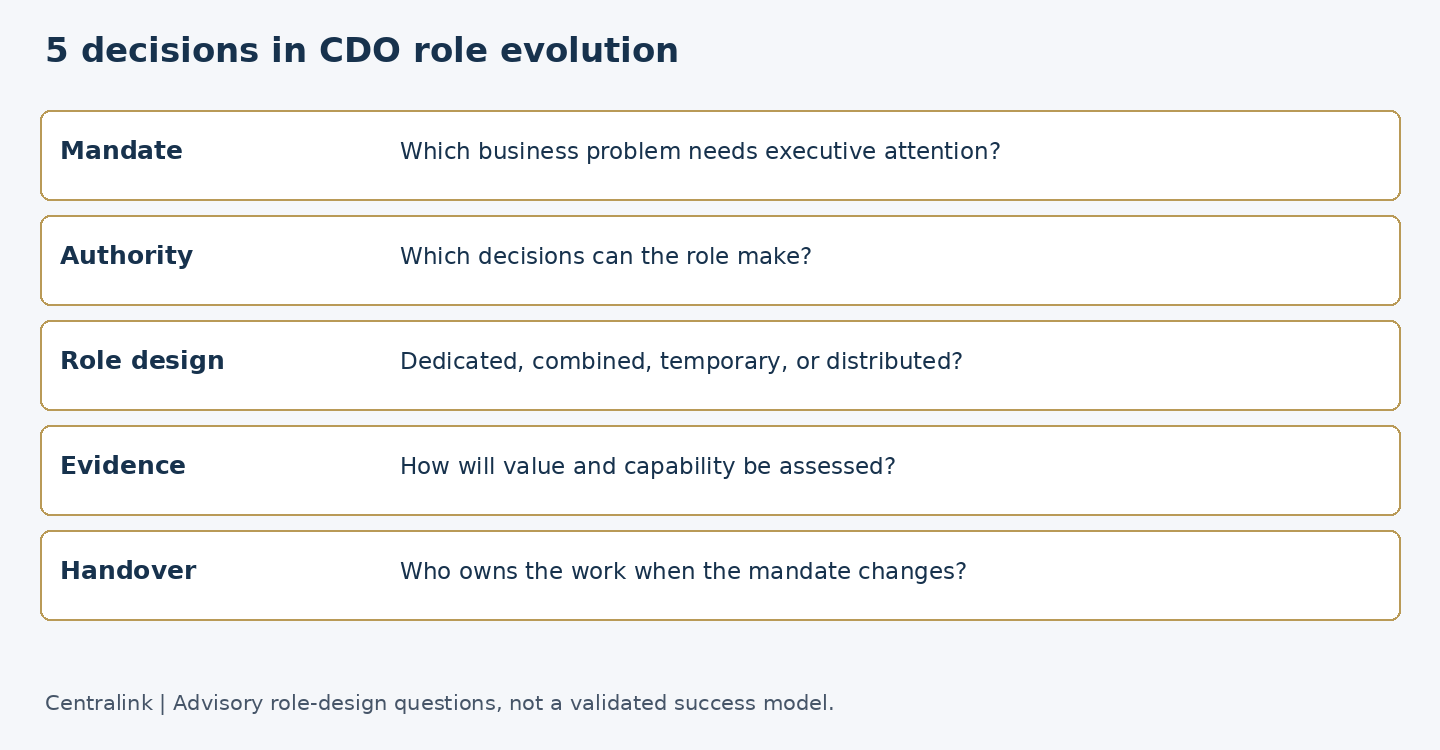
2. Involve people while choices remain open
Meaningful involvement gives affected staff a chance to influence how the new process is designed and supported. Consultation is less useful if every important decision has already been made. Explain what can change, what is constrained, and how concerns will receive a response.
Include people with different experience, working patterns, and support needs. Use the appropriate representative and specialist channels for the organisation. Distinguish management engagement from any specific legal consultation requirement, which needs its own review.
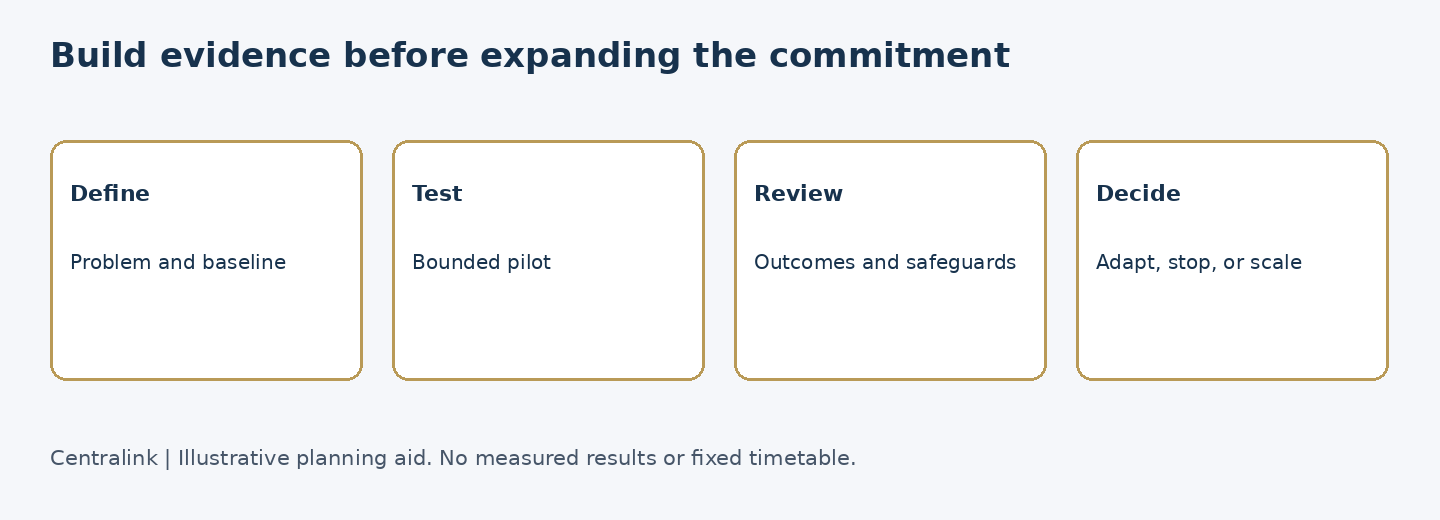
3. Make new responsibilities explicit
AI change management should make clear who prepares work, checks output, approves a commitment, and handles an exception. Unclear responsibilities can leave staff assuming someone else has verified the result. A person who is accountable also needs enough information and authority to act.
Write short task instructions and test them with realistic cases. Explain when AI must not be used, where the source information comes from, and which uncertain results require escalation. Connect instructions with the wider AI governance approach.
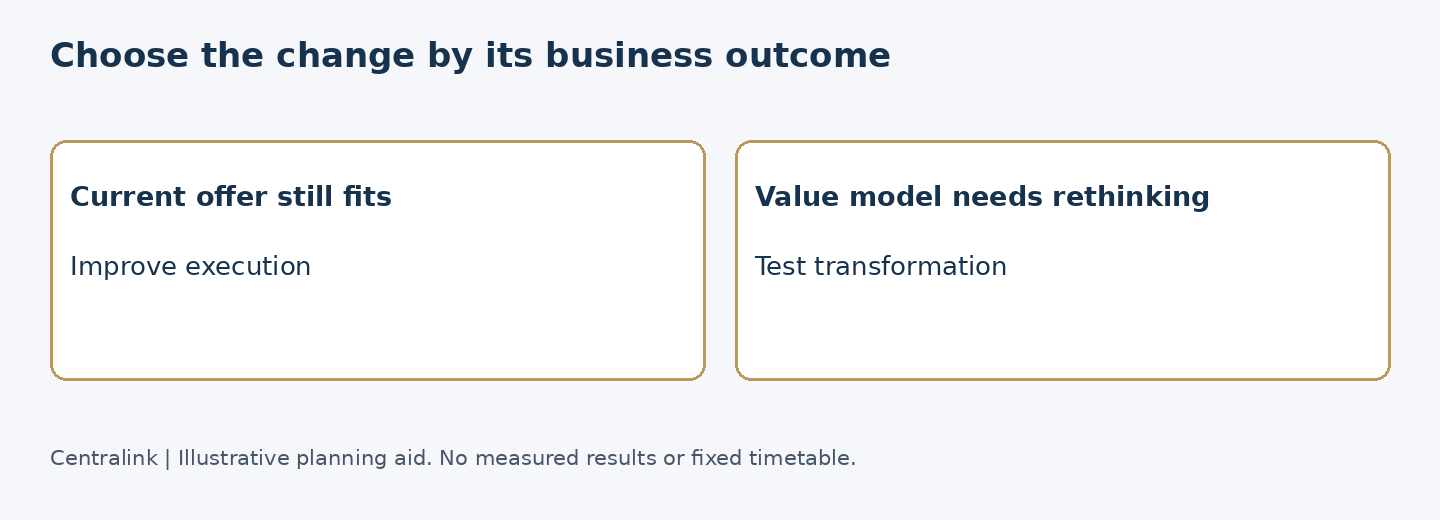
4. Practise before expecting dependable use
Learning should help people perform the new task and recognise when the system is unsuitable. Match practice to the user’s role, existing knowledge, and operating context. Course completion can document participation, but a practical exercise provides better evidence about the support still needed.
Provide approved examples containing missing information or a plausible error. Ask learners to explain their checks and corrections. Give managers practice in responding to concerns rather than only encouraging greater usage.
5. Introduce the change within a bounded scope
A bounded rollout allows the organisation to examine service quality, workload, and support requirements before making a wider commitment. Define the users, cases, safeguards, and review date. A small initial scope is useful only if the test reflects enough of the actual work to inform a decision.
Keep a suitable alternative for cases the new process cannot support. Monitor manual corrections and additional help as well as favourable feedback. Do not pressure users to adopt a tool in circumstances outside its approved use.
6. Review outcomes and adapt the work
AI change management continues after launch through feedback, operating evidence, and decisions about improvement. Adoption is one signal, but frequent use does not establish value or responsible operation. Review whether the changed process helps people deliver a dependable result and what work it creates elsewhere.
A hypothetical service team might use AI to prepare reply drafts. The review should examine complete resolution time, factual corrections, customer outcomes, and support effort. If results are weak, revise the workflow or scope rather than treating additional communication as the automatic solution.
Evidence and further reading
The CIPD’s AI guidance for people professionals calls for cooperation between people, technical, legal, and compliance functions. The OECD’s work on algorithmic management highlights consultation and worker well-being; algorithmic management is broader than AI, so its findings should not be relabelled as AI-only evidence. The NIST AI RMF supports ongoing management of risks across the system lifecycle.
How can Centralink help?
Centralink can help connect an AI proposal with task design, leadership responsibilities, employee involvement, learning, and a practical review plan. A useful starting point is one workflow and the people who will have to deliver it.
Learn more about Centralink, explore our digital transformation services, or contact Centralink to discuss your organisation’s priorities.
Frequently asked questions
These answers clarify the decisions covered in this guide. Adapt the suggested approach to the organisation’s actual work, people, information, and resources. Examples are illustrative management scenarios rather than reported Centralink client results, and the guidance does not certify a system or establish legal compliance.
Is AI change management mainly communication?
Communication is necessary, but it cannot fix unsuitable task design, unclear responsibilities, or insufficient review capacity. Examine those conditions alongside messages and training. Staff need a workable process as well as an explanation of why it is changing.
Should adoption rate be the main success measure?
Usage can show whether the process is being used, but it does not establish quality, value, or suitability. Review operating outcomes, errors, workload, and support alongside adoption. In some cases, choosing not to use AI is the correct action.
When does AI change management end?
The initial rollout has a completion point, but operating ownership, feedback, and learning should continue. Review the change when tools, tasks, data, or consequences change. Agree who maintains instructions and who can decide that the process needs revision.