

Currently Empty: € 0,00
AI
AI Learning Leadership: 5 Critical Conditions for Skills

AI Learning Leadership: 5 Critical Conditions for Skills
By Centralink
AI learning leadership concerns the conditions managers create for people to build and apply suitable AI skills. Centralink supports management consulting, corporate training, and digital transformation in the Netherlands. This guide explains five leadership decisions that connect training with everyday work.
Why do AI skills need leadership support?
Employees need skills, but they also need approved uses, suitable information, time, feedback, and clear responsibility. Training cannot compensate for every weakness in those conditions. Leaders should examine both what people need to learn and whether the workplace allows them to use that learning responsibly.
Avoid treating skills and structure as competing explanations. A team may lack practical knowledge and face an unsuitable process at the same time. Investigate the actual task before selecting another course or blaming employees for limited adoption.
1. Define the work people must perform
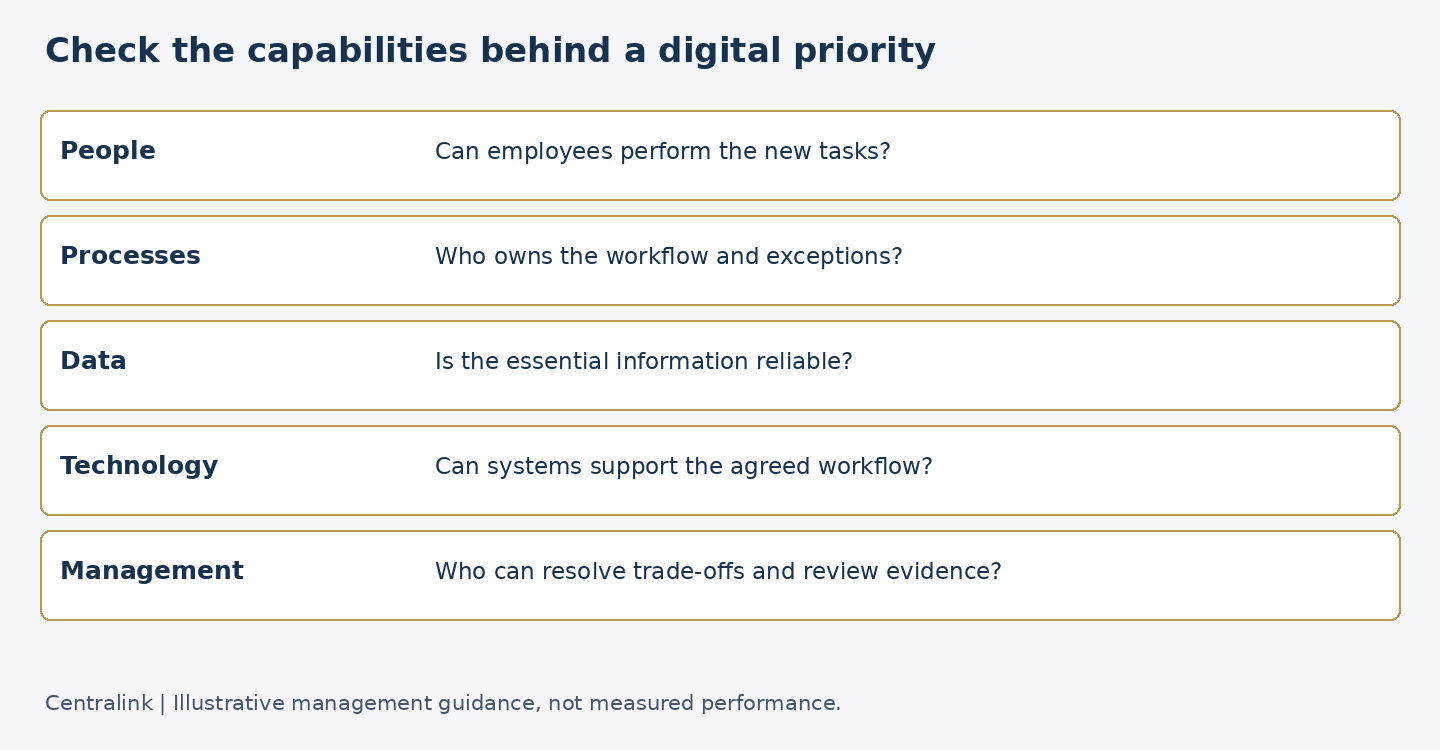
AI learning leadership begins with a clear account of the tasks, checks, and decisions expected from each role. A broad request to become AI-literate gives trainers and employees little direction. Identify what a competent person should be able to recognise, do, and escalate.
Use a real use case and map its workflow. Separate user skills, managerial review, technical work, and specialist responsibilities. The AI skills gap guide provides a complementary role-based planning approach.
2. Provide time, tools, and safe practice
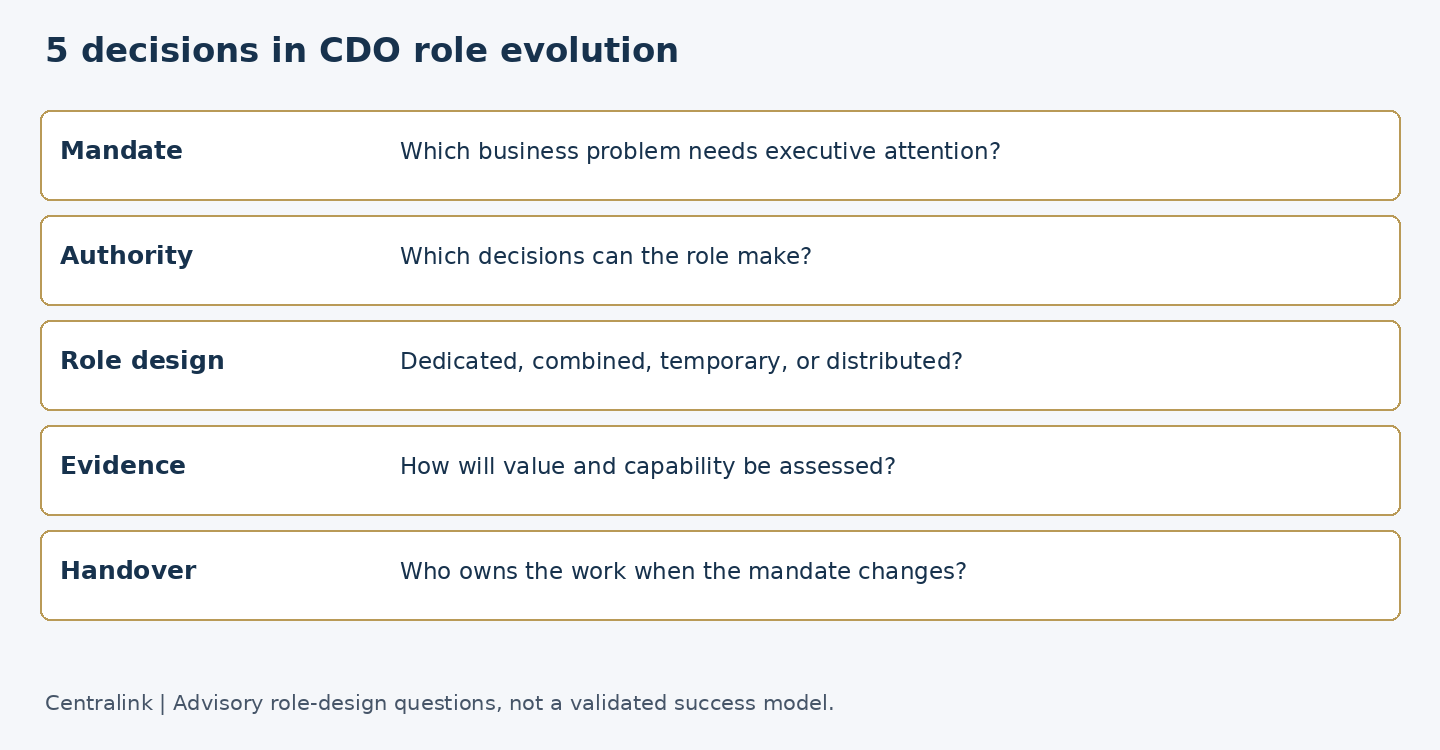
Learning needs realistic time and suitable resources, including approved tools and information. An employee asked to practise responsibly should not have to invent an unauthorised route or use confidential material. Leaders should fund practice and support as part of the operating change.
Choose exercises reflecting ordinary tasks and plausible mistakes. Allow people to ask questions and receive feedback before expecting dependable use. Check whether workload targets discourage the review habits taught in training.
3. Explain decision rights and support routes
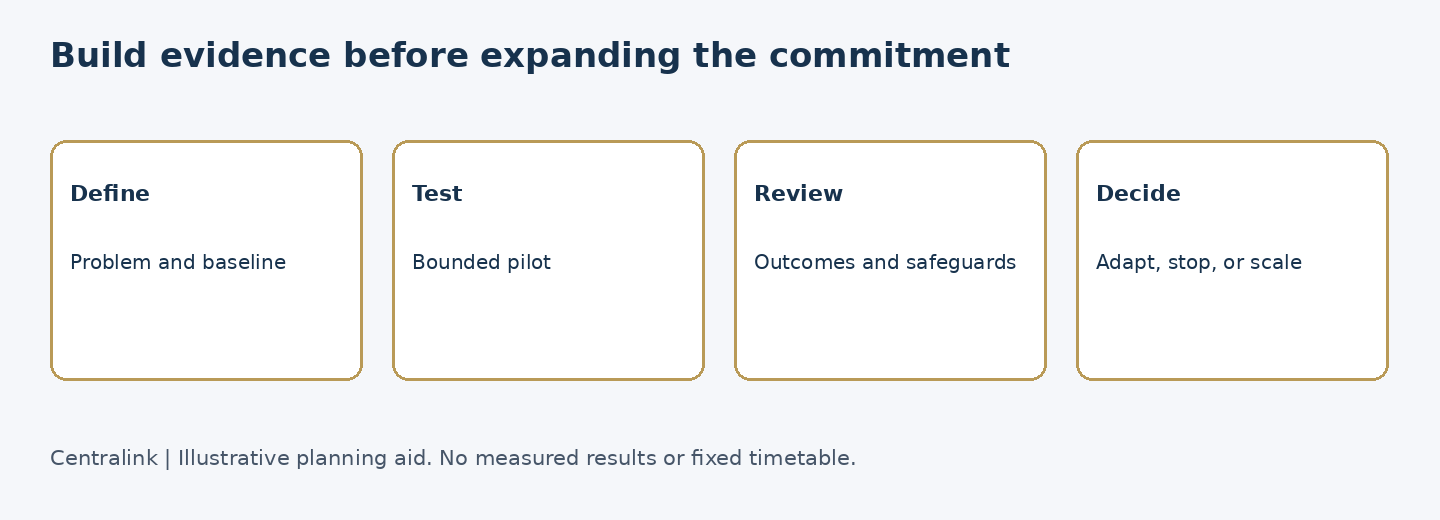
People need to know which decisions they can make, which outputs require review, and who can help with uncertainty. Learning is harder to apply when the organisation gives contradictory instructions or leaves authority unclear. Managers should resolve those boundaries alongside the training plan.
Show examples of acceptance, correction, rejection, and escalation. A user should understand the reason for a check, not merely memorise a list. Where the expected action remains unclear, improve the process before judging the learner.
4. Assess performance with realistic evidence
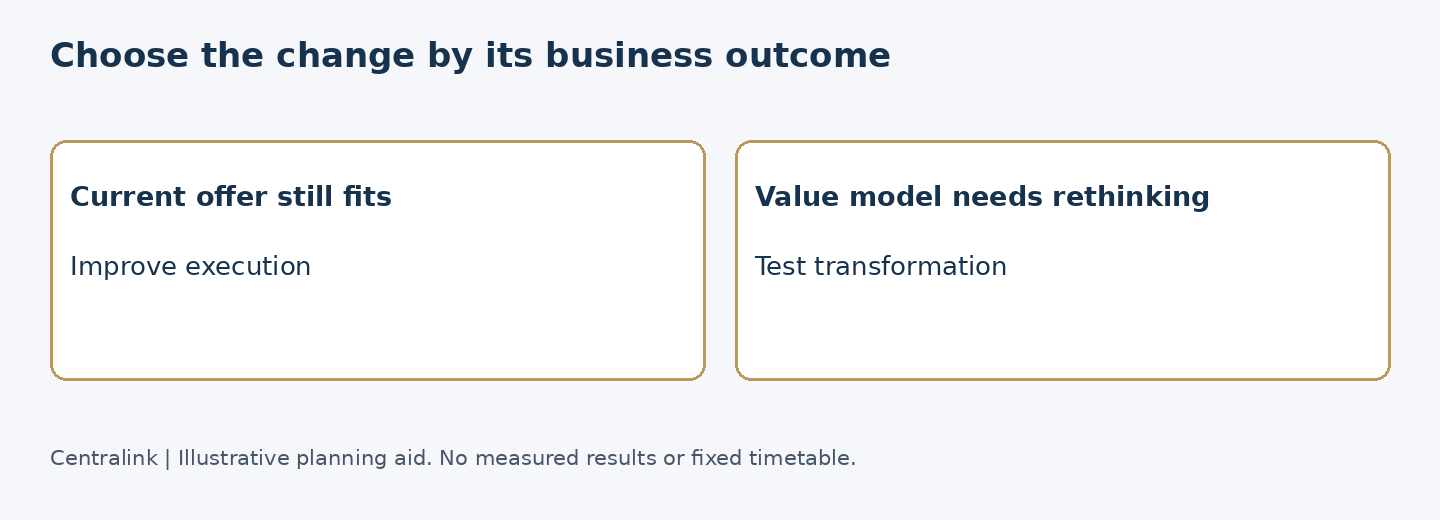
AI learning leadership should favour evidence of task performance over confidence scores alone. Observe how people check a result, identify missing information, and explain a decision. Attendance and feedback remain useful, but they answer different questions from a practical assessment.
Use appropriate examples and fair assessment conditions. Distinguish a knowledge gap from lack of access, unclear instructions, or an unrealistic workload. The response may involve further practice, better information, or redesign of the task.
5. Keep learning connected with change
AI tools and workflows can change after the initial course, so learning ownership should continue. Assign responsibility for updating instructions, sharing lessons, and identifying new support needs. A training programme is more useful when operating evidence can change its content and priorities.
A hypothetical team might repeatedly miss errors in generated summaries because the review checklist ignores omissions. Leadership should improve the checklist and practice, then review performance. This is an illustrative example, not a reported Centralink client result.
Evidence and further reading
The OECD’s 2025 AI skills brief distinguishes specialist expertise from general literacy needs. The CIPD’s AI guidance connects people, tasks, and organisational design. The NIST AI RMF provides a voluntary reference for ongoing management. These sources support examining capabilities and conditions together, without proving that any one intervention guarantees a result.
How can Centralink help?
Centralink can help leaders connect a learning programme with actual tasks, operating responsibilities, and evidence of capability. Begin with a recurring task where people are uncertain about what to check or who can approve the outcome.
Learn more about Centralink, explore our digital transformation services, or contact Centralink to discuss your organisation’s priorities.
Frequently asked questions
These answers clarify the decisions covered in this guide. Adapt the suggested approach to the organisation’s actual work, people, information, and resources. Examples are illustrative management scenarios rather than reported Centralink client results, and the guidance does not certify a system or establish legal compliance.
Can training solve every AI adoption problem?
No. It can address knowledge and practice needs, but unsuitable information, unclear authority, and unrealistic workload may require other changes. Examine the task and its conditions. Training and process improvement can be needed together.
Should leaders attend the same AI course as staff?
Some shared understanding is useful, but learning should also match responsibilities. Leaders need to evaluate investments, operating risks, evidence, and accountability. Users need practice in their own tasks and checks.
How can managers tell whether learning is working?
Observe relevant task performance and review operating evidence, including errors and support needs. Compare with clear expectations and appropriate baselines. Confidence and satisfaction can inform the discussion, but they do not establish dependable capability on their own.