

Currently Empty: € 0,00
AI
Leadership in the AI Era: 5 Critical Management Duties

Leadership in the AI Era: 5 Critical Management Duties
By Centralink
Leadership in the AI era requires clear priorities, informed decisions, suitable people capabilities, and accountable operating arrangements. Centralink supports management consulting, corporate training, and digital transformation in the Netherlands. This guide focuses on five management duties that remain important as tools change.
What changes for leadership in the AI era?
Leadership in the AI era involves deciding where AI is useful, what authority it should have, and what evidence supports reliance on it. Leaders need enough understanding to question proposals and recognise when specialist input is required. They do not need to pretend that every technical or legal issue falls within their expertise.
The management challenge includes uncertainty. A credible leader makes assumptions visible, provides a workable route for concerns, and remains willing to revise the plan when evidence does not support the original ambition.
1. Set priorities and make exclusions clear
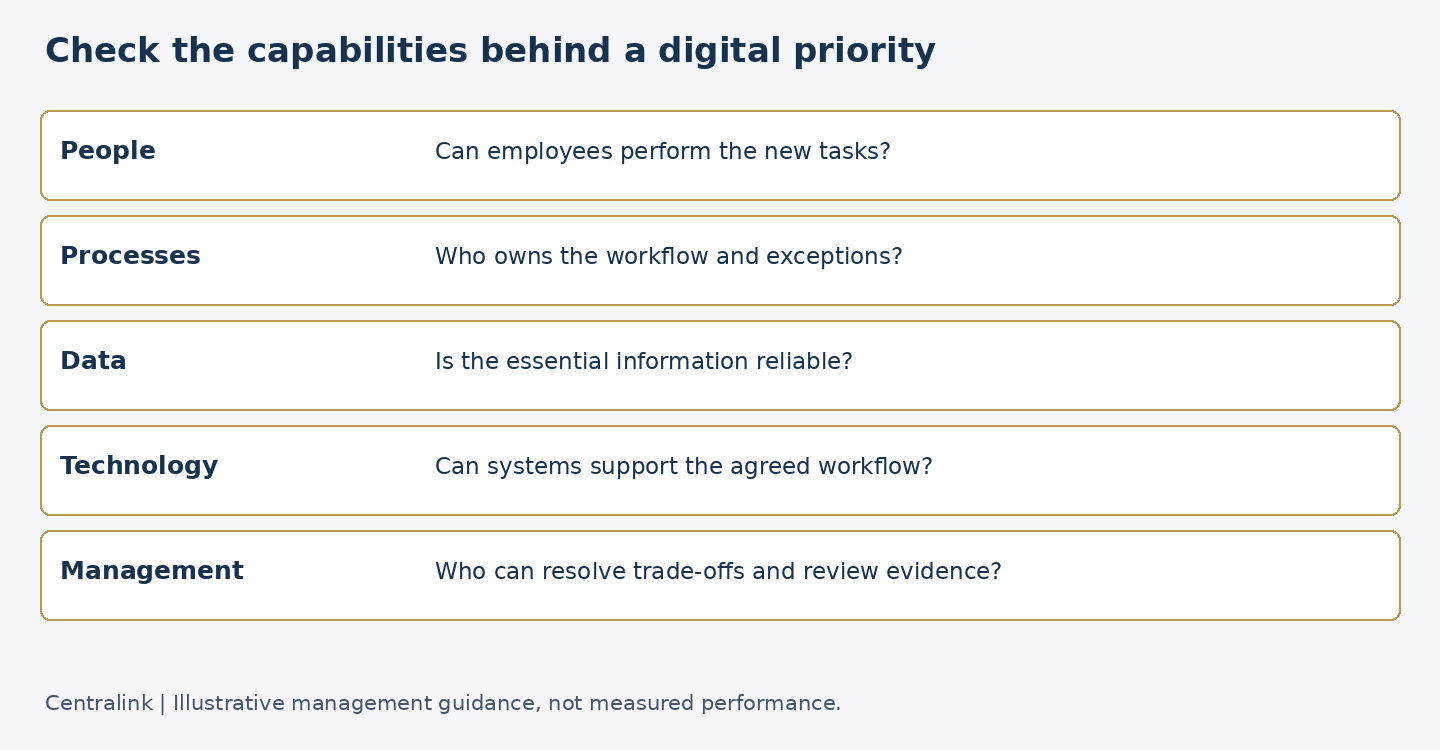
Leaders should connect AI work with a defined business problem and decide what the organisation will not pursue. A long list of experiments can spread limited attention, skills, and support too thinly. Prioritisation should consider expected value, dependencies, consequences, and capacity.
Ask each initiative to identify the outcome, baseline, owner, and next decision. Compare AI with simpler alternatives. A clear exclusion can protect people from pressure to use a tool where it does not fit the task.
2. Ask questions that expose assumptions
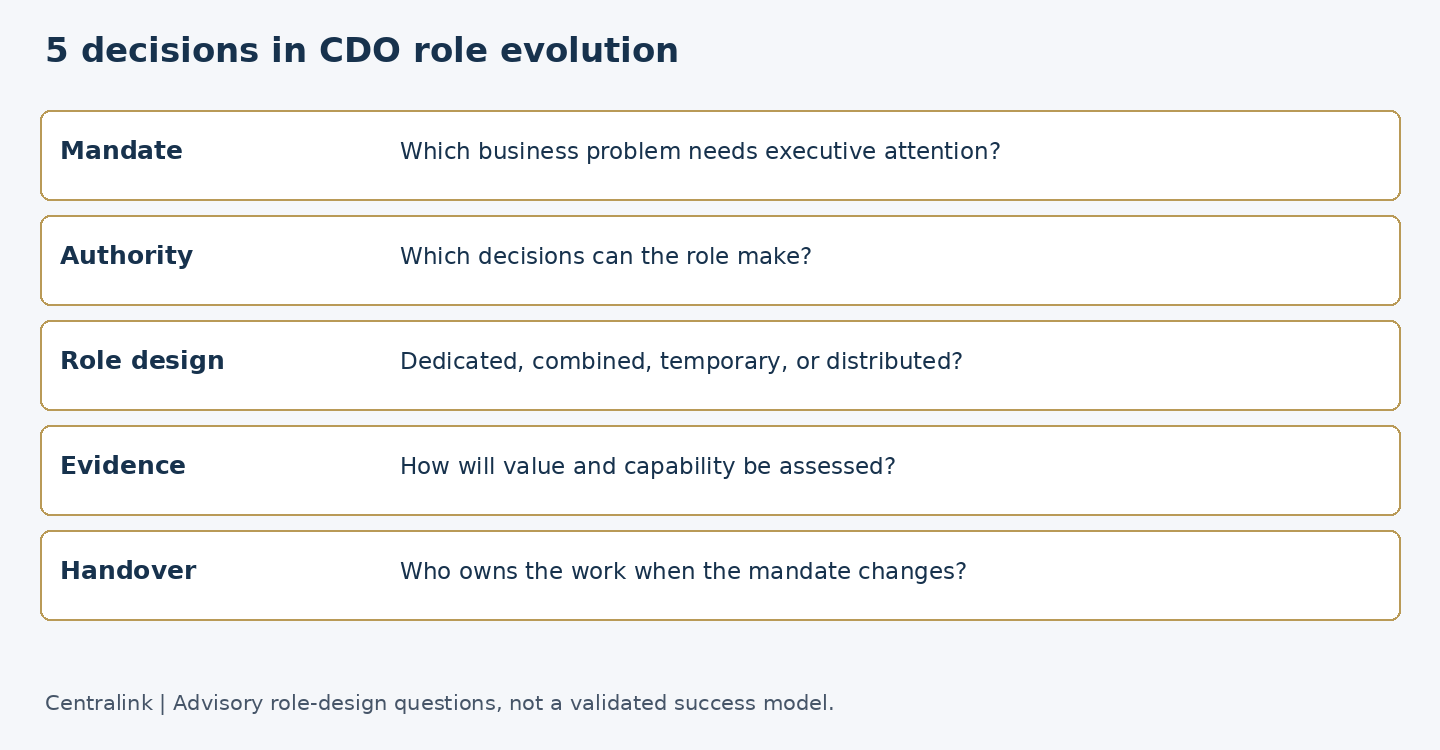
A useful leadership review examines the evidence behind a proposal, including what has not been tested. Ask which information the system relies on, how errors are found, what support is needed, and what would cause the team to change its recommendation.
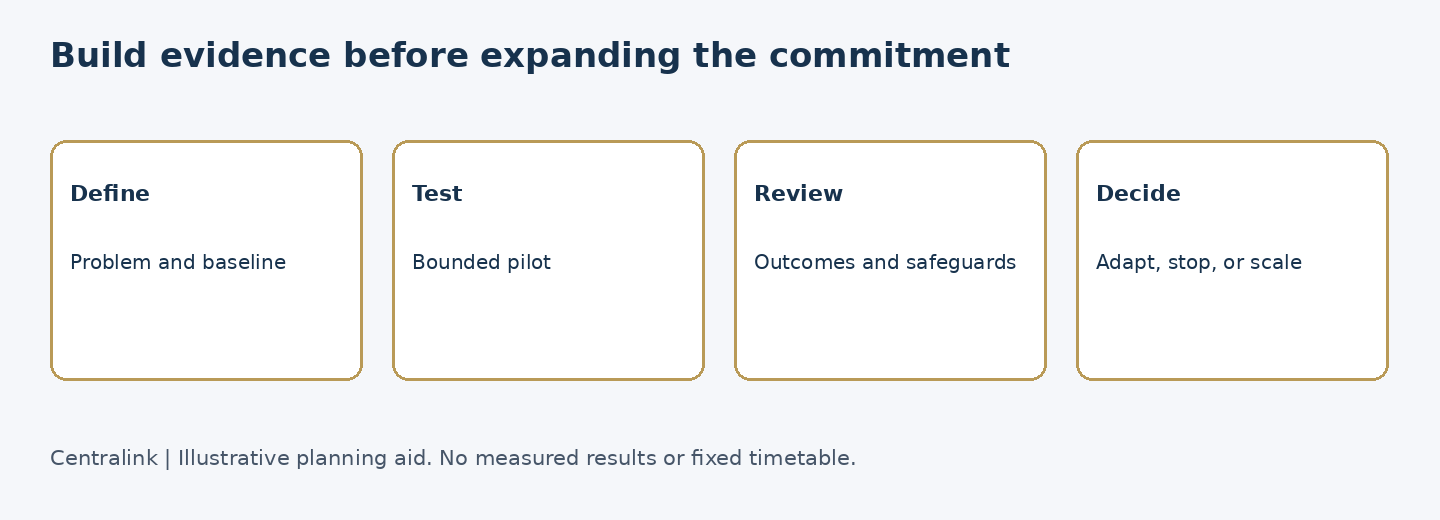
Distinguish a demonstration from a reliable operating result. Use the AI investment gates guide to connect the question with a proportionate commitment.
3. Provide the conditions for competent use
People need approved tools, suitable information, role-specific practice, time, and advice routes. Leadership should fund those conditions alongside the technology. A demand for faster output can undermine careful checking if staff are also expected to verify every result without additional capacity.
Review the actual work and involve affected teams in design. Where people raise a concern, investigate its substance before interpreting it as resistance. Learning and operating design often need to improve together.
4. Assign authority and maintain oversight
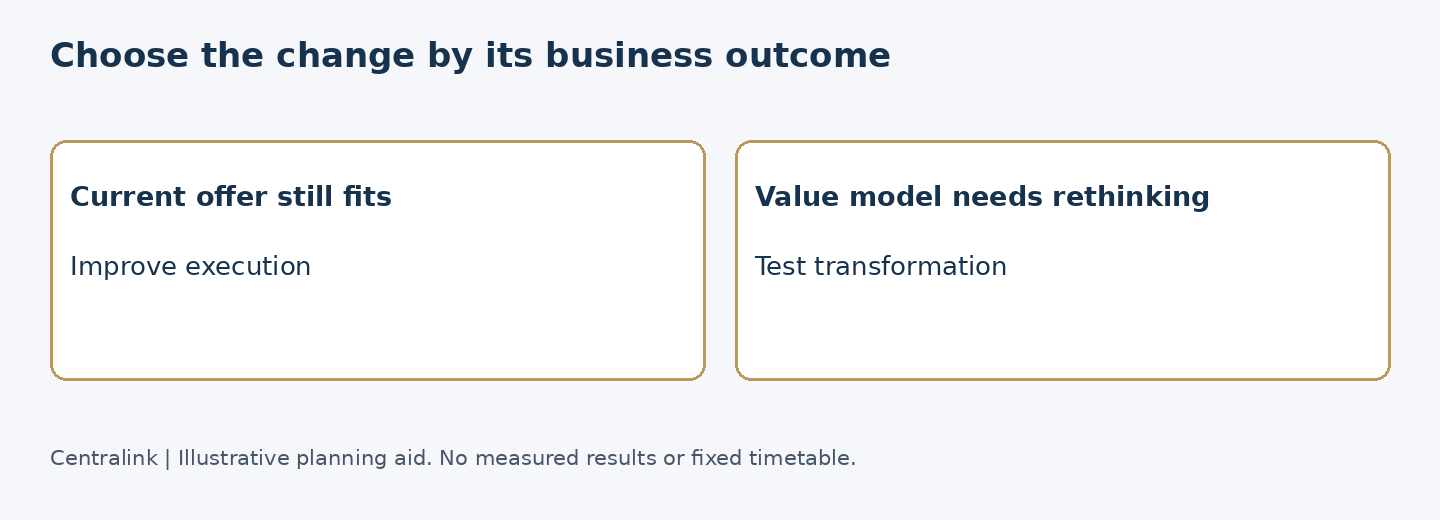
Leadership in the AI era should make responsibility for outcomes, technical services, specialist assessments, and investment decisions explicit. Delegation should include authority and resources, while preserving appropriate oversight. A named owner cannot fulfil the role if every decision remains blocked elsewhere.
Review material changes in scope, information, permissions, or affected people. Ask who can restrict or stop the service and how issues reach the authorised decision-maker. Connect the arrangements with AI accountability.
5. Judge progress through outcomes and learning
Leaders should review quality, complete effort, costs, support, and relevant effects on customers and staff, alongside usage. The aim is a dependable improvement, not a growing count of tools. Record what experience establishes and where uncertainty remains.
Make room for adaptation and stopping. A pilot that disproves an assumption can support a good decision if the organisation acts on the evidence. Preserve the lesson rather than presenting every experiment as an inevitable success.
Evidence and further reading
The OECD AI Principles provide a responsible-use reference. The NIST AI RMF supports structured governance and evaluation. The CIPD’s AI guidance connects leadership choices with people and organisational design. The five duties here are Centralink’s practical leadership prompts, not a validated leadership score.
How can Centralink help?
Centralink can help leadership teams clarify priorities, responsibility boundaries, learning needs, and the evidence required for the next decision. Begin with an active initiative whose purpose or operating ownership needs attention.
Learn more about Centralink, explore our digital transformation services, or contact Centralink to discuss your organisation’s priorities.
Frequently asked questions
These answers clarify the decisions covered in this guide. Adapt the suggested approach to the organisation’s actual work, people, information, and resources. Examples are illustrative management scenarios rather than reported Centralink client results, and the guidance does not certify a system or establish legal compliance.
Must every leader become an AI engineer?
No. Leaders need relevant understanding to question proposals, make operating decisions, and know when to obtain specialist input. Technical depth should match the role. Pretending to have expertise can weaken rather than strengthen oversight.
Should leaders encourage AI use in every team?
Encourage investigation of useful opportunities while making scope and exclusions clear. Some tasks may be better served by simpler changes or professional judgement. The decision should reflect evidence, capacity, and consequences.
How should leaders respond to an unsuccessful pilot?
Examine what the test established, its limitations, and what should change. The appropriate decision may be revision, further testing, restriction, or stopping. Avoid treating additional spending as the automatic response.