

Currently Empty: € 0,00
AI
AI Business Ownership: 5 Critical Leadership Decisions

AI Business Ownership: 5 Critical Leadership Decisions
By Centralink
AI business ownership means assigning responsibility for the outcome of an AI-enabled process, alongside technical and specialist responsibilities. Centralink supports management and digital transformation in the Netherlands. This guide explains five decisions that help leaders connect technology delivery with dependable business operation.
Why does AI need a business owner?
An AI use can change a service, a decision, a workflow, and the work expected from employees. A technical team can deliver a functioning system without being able to decide every commercial or operating trade-off. Business ownership connects the proposed change with a person authorised to accept its outcome.
This does not reduce IT’s role. Technology, integration, security, and supplier management remain essential. The question is whether the organisation has assigned both technical responsibilities and authority over the business process, rather than assuming one team owns every consequence.
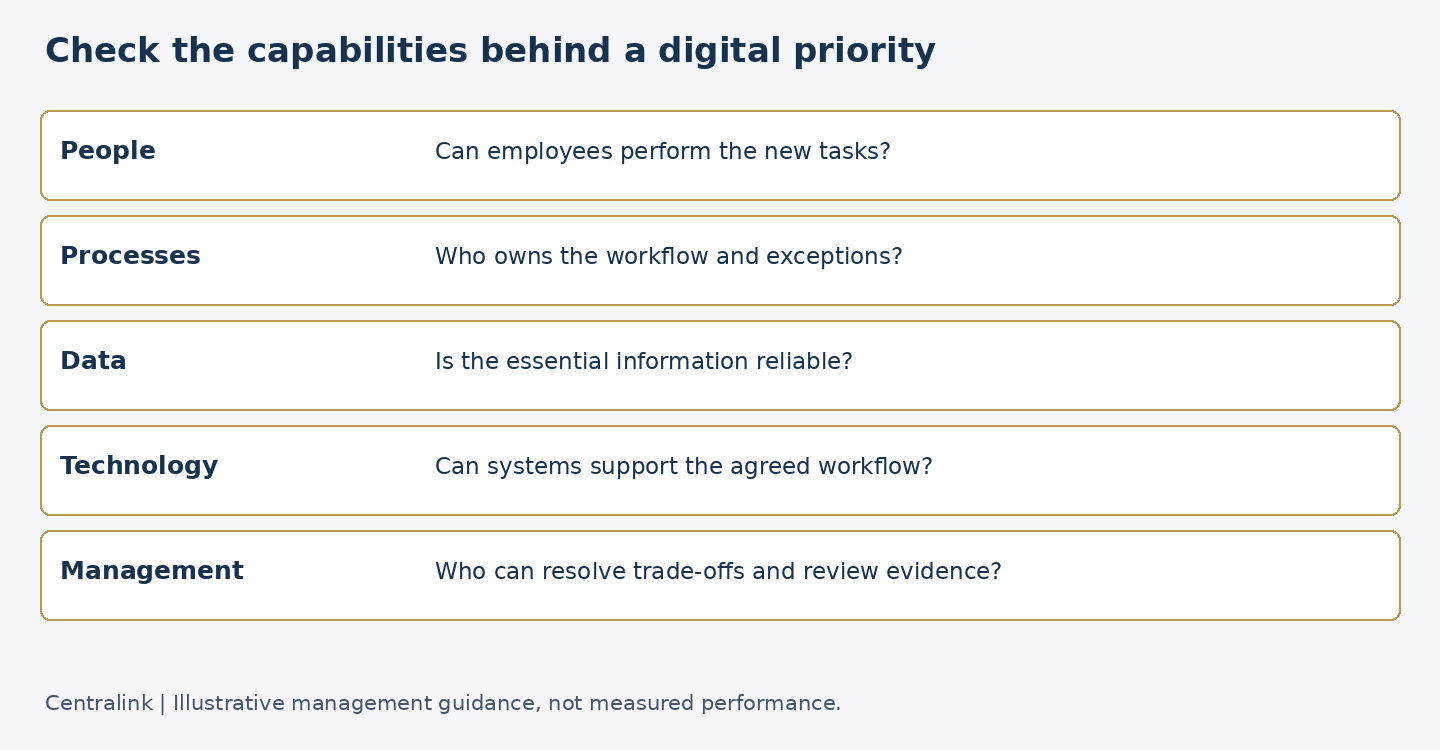
1. Name the outcome and its accountable owner
AI business ownership starts with a defined outcome and a named leader who can make decisions about the relevant process. The owner should understand current performance, affected people, operating constraints, and the intended benefit. A broad sponsor title is insufficient if the person cannot resolve practical trade-offs.
For an illustrative sales-support use, the sales process owner might accept responsibility for quotation quality and response time, while IT manages integration. Finance or commercial specialists would retain their approval responsibilities. The allocation should reflect actual authority.
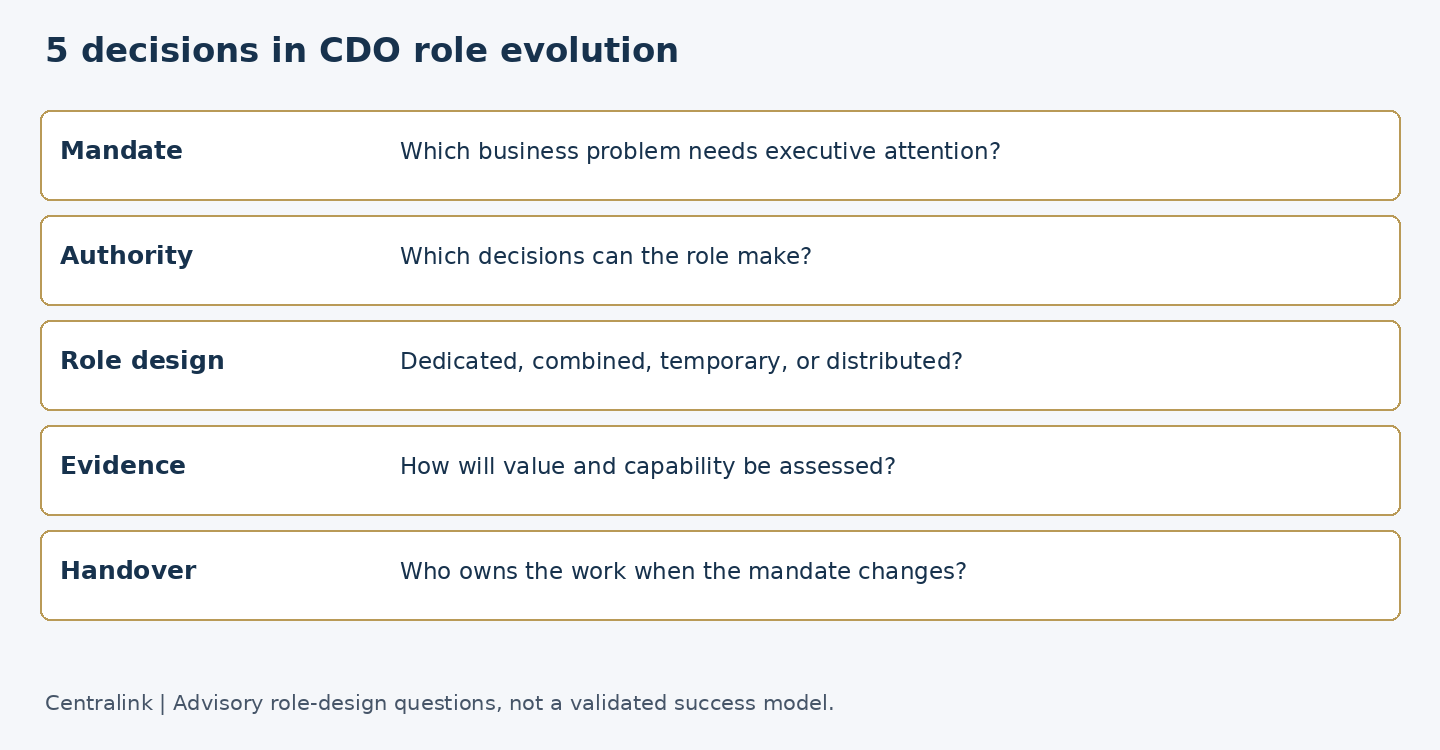
2. Agree the decisions that need joint input
Different decisions need different expertise. Business owners define the intended service and acceptable operating conditions, while specialists examine technical, security, privacy, workforce, and legal questions. AI business ownership should make those contributions explicit and provide a route for resolving disagreements.
Record who approves scope, information use, review arrangements, investment, and expansion. Where a question exceeds the owner’s authority, define an escalation route. Joint working should not mean that every important decision is left to an unnamed group.
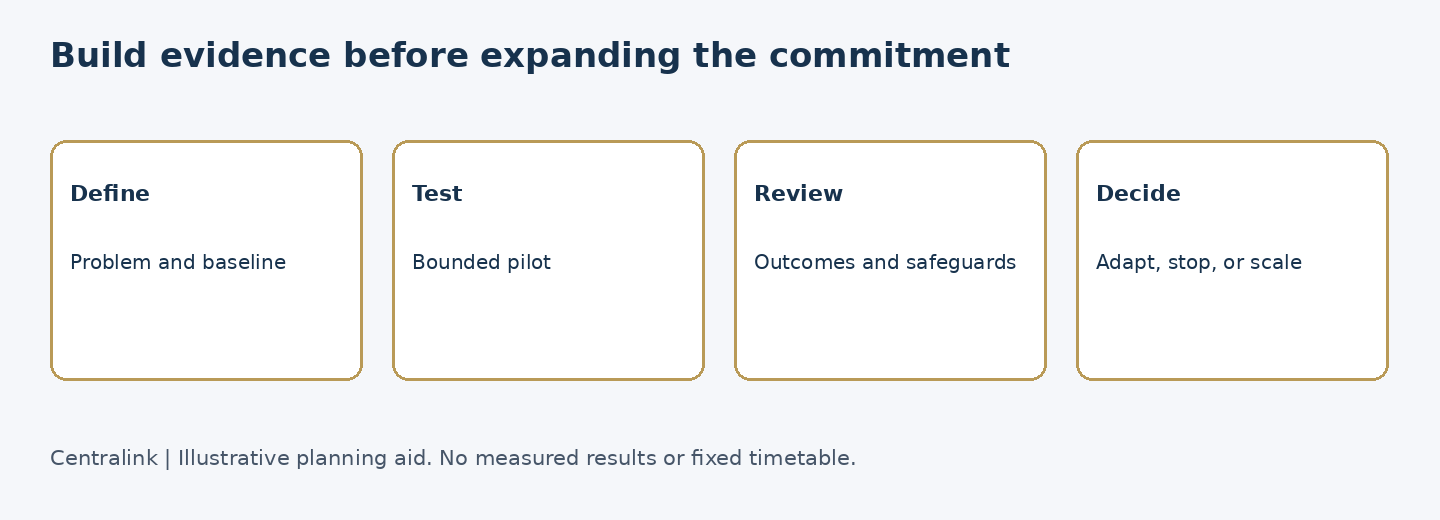
3. Fund the complete operating change
The business case should include the work required to use and maintain the system, not just its installation. Review capacity, training, process design, support, evaluation, supplier dependencies, and ongoing costs all affect whether the service can be sustained after the project team leaves.
Ask who will pay for and perform those activities. If the proposal relies on staff checking every output, that work needs an owner and realistic capacity. A benefit estimate that excludes the necessary checking effort is incomplete.
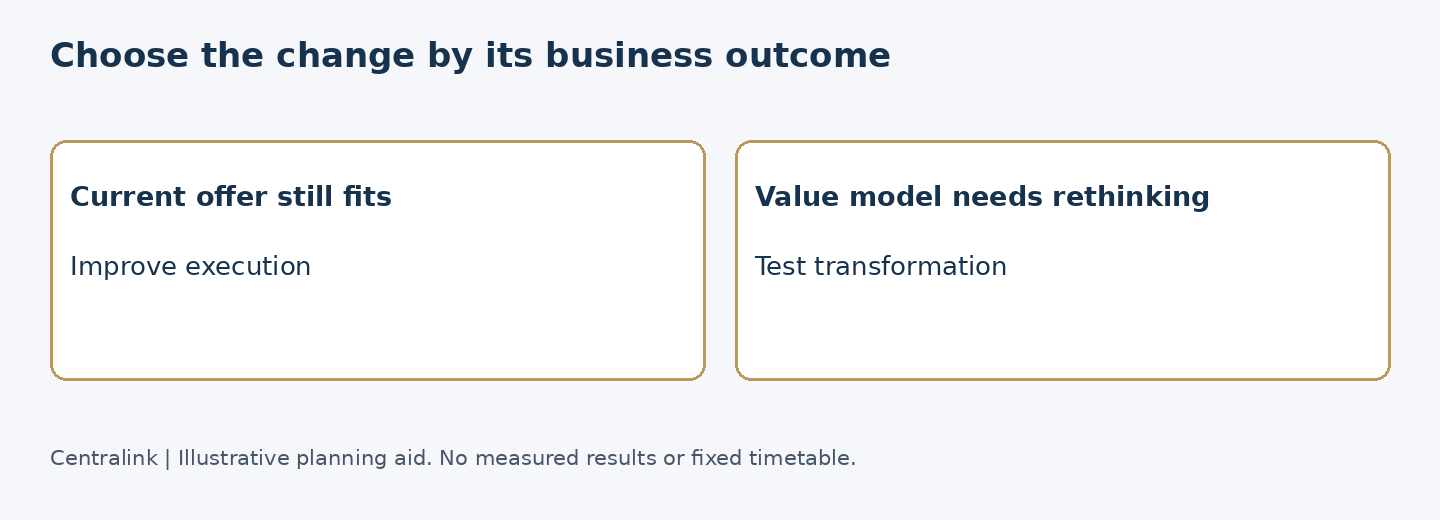
4. Accept evidence rather than a demonstration
An operating owner should approve progress on the basis of defined evidence, with technical and specialist input. A demonstration can show a possibility, but it does not establish performance across ordinary demand, exceptions, and failure. Agree acceptance criteria and the limits of the test before the pilot begins.
Compare the full workflow with a baseline. Include errors, correction effort, customer or staff effects, and support. Use the result to decide whether to expand, adapt, continue testing, or stop. The accountable owner should be able to explain that decision.
5. Retain ownership after launch
AI business ownership continues through monitoring, incident handling, supplier or scope changes, and improvement decisions. A project handover should identify who maintains the service and who can restrict or stop it. Ownership should remain visible when the original sponsor or supplier contact changes.
Review material changes against the approved purpose. A system introduced to prepare internal drafts should not quietly become authorised to make external commitments. Connect ongoing decisions with the AI governance controls.
Clarify responsibilities before delivery
This table is a starting point for discussion rather than a fixed organisation chart. Assign roles according to the use and actual authority. One person may hold several roles in an SME, but the different responsibilities still need to be understood.
| Responsibility | Main question | Typical contribution |
|---|---|---|
| Business outcome | What should improve? | Process owner |
| Technical service | Can it operate dependably? | IT and technical teams |
| People and roles | Can staff do the changed work? | Managers and HR |
| Specialist assessment | What requirements and safeguards apply? | Relevant legal, privacy, security and risk specialists |
| Investment decision | Is the next commitment justified? | Authorised sponsor or executive |
Evidence and further reading
The NIST AI Risk Management Framework provides voluntary guidance on managing risks across AI design, use, and evaluation. The OECD AI Principles include accountability. The CIPD’s guidance highlights cooperation between people, technical, legal, and compliance functions. The responsibility model here is Centralink’s suggested management approach, not a mandatory structure prescribed by these sources.
How can Centralink help?
Centralink can help clarify the operating outcome, responsibility boundaries, and evidence required to move an AI proposal into dependable use. Begin with one active initiative and identify the decisions that currently lack a clear owner.
Learn more about Centralink, explore our digital transformation services, or contact Centralink to discuss your organisation’s priorities.
Frequently asked questions
These answers clarify the decisions covered in this guide. Adapt the suggested approach to the organisation’s actual work, people, information, and resources. Examples are illustrative management scenarios rather than reported Centralink client results, and the guidance does not certify a system or establish legal compliance.
Should IT own every AI initiative?
IT should own the technical responsibilities assigned to it, but it may not have authority over every business outcome or workforce decision. Name a business owner and define specialist contributions. The allocation should follow the process and its consequences.
Can an SME combine several ownership roles?
Yes, where the person has suitable competence, authority, and capacity. Combining roles does not remove the need to understand each responsibility. Obtain independent or specialist input where the use and decision require it.
Does naming an owner remove the board’s oversight role?
No. Delegation should make responsibilities clearer while preserving appropriate oversight. Leaders still need to review material risks, investment assumptions, unresolved issues, and evidence supporting expansion. The operating owner should provide information that enables that review.